
Play's The Thing: Being Prosocial
A familiar place
This is the 4th consecutive year we’ve played The Lille Regional Championship, so as our train was pulling into the station Nate turned to Tommy and asked, “Do you think the Pacman is still there?” He was referring to a piece of analog pixel art created by a bored office dweller - a series of post-it notes stuck to a window on the tower over the train station depicting Pacman chasing a ghost. We noticed it the first time we came to Lille, and it has been there every year since in the same place, just growing a bit more faded from the sunlight. Does the original artist even occupy that office anymore? We wonder.
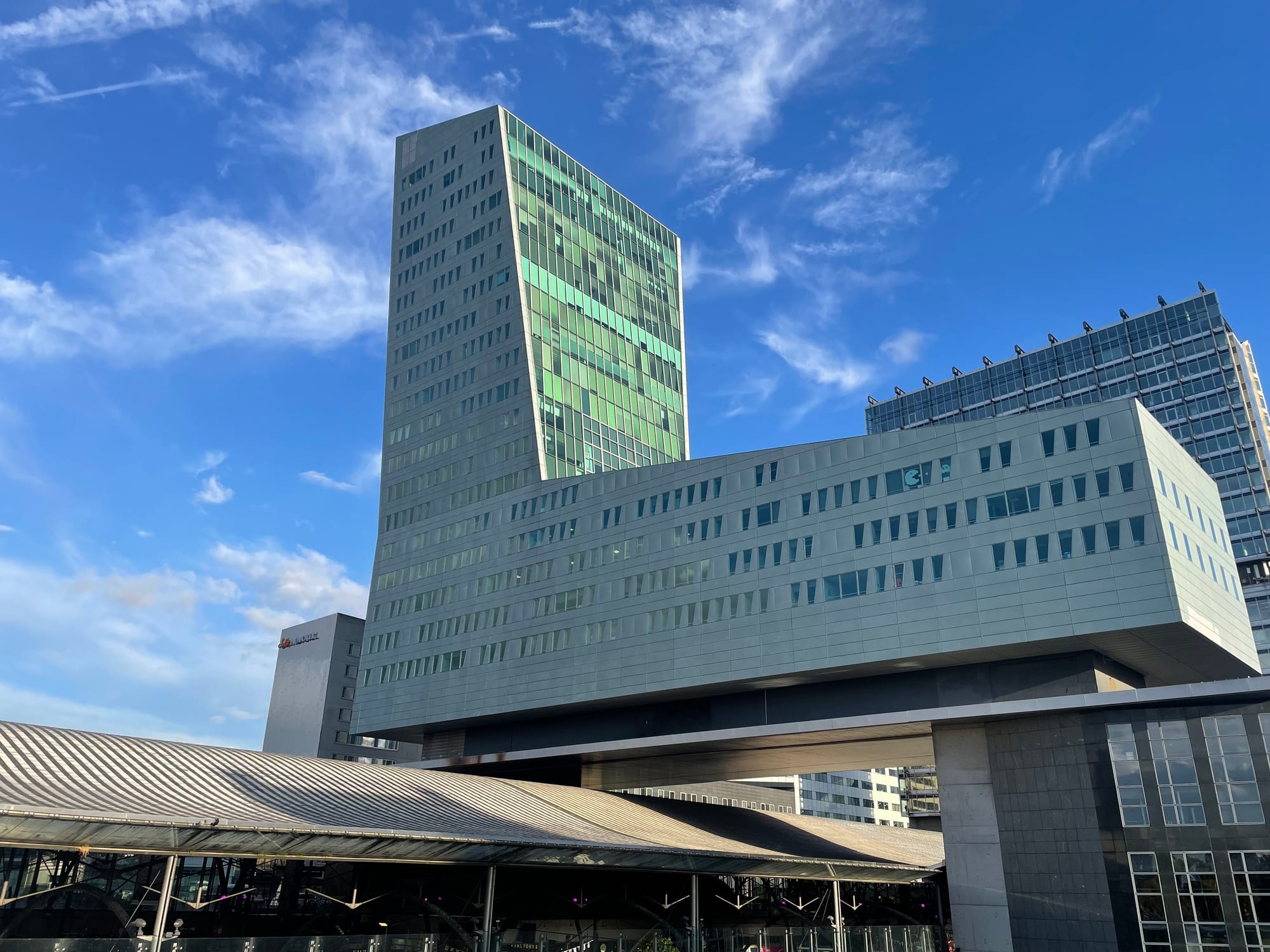
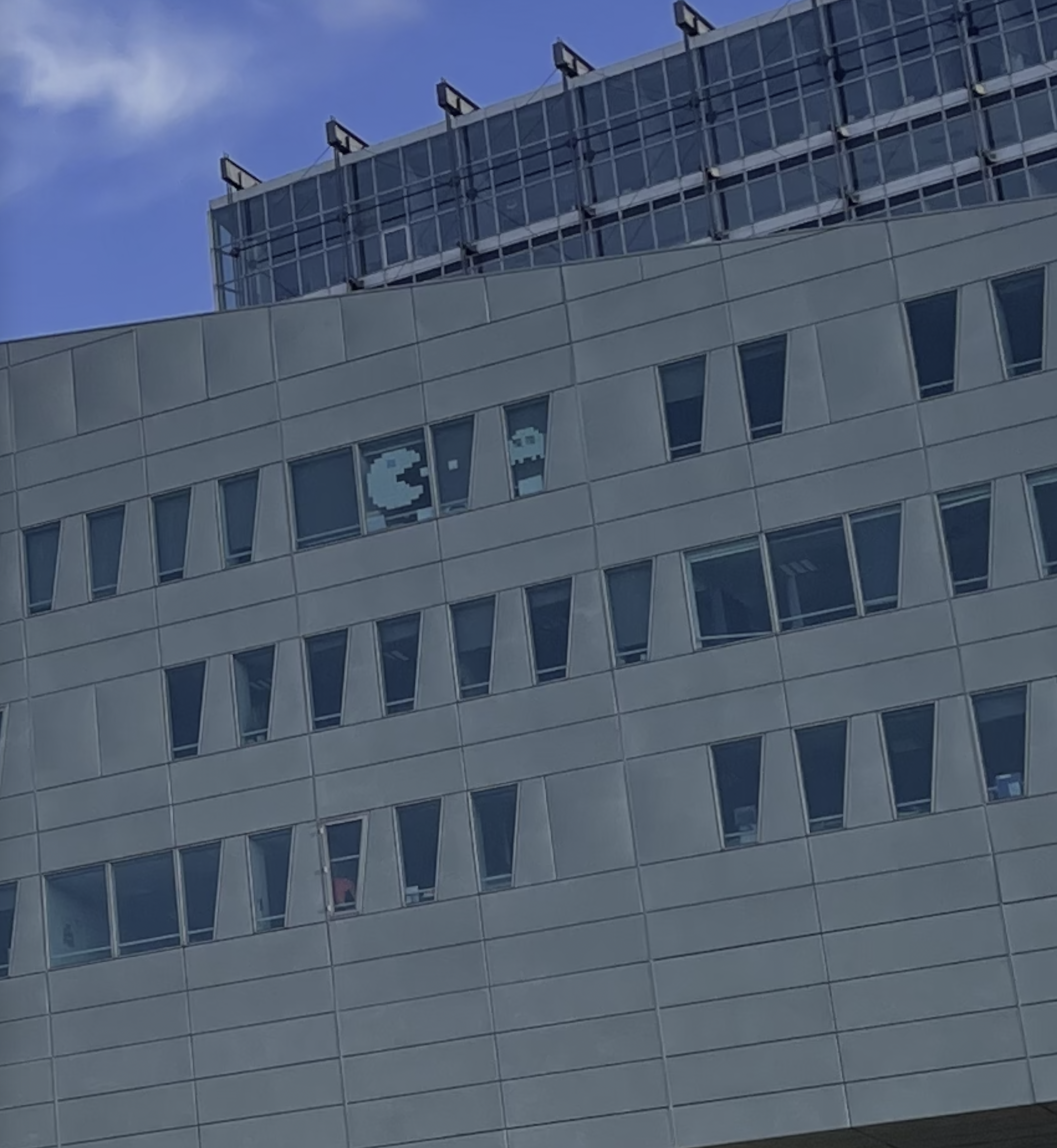
Pacman was indeed still there. As we walk around the city to go get dinner in the evenings, the kids remark on things they remember from our past visits. They know how to navigate from the hotel to the Grand Palais where the tournament is held. They know where we might eat but are willing to try new places.
Seeing them like this gives me both a sense of pleasure and a sense of pride. I am not sure that I impart too many things as a father - certainly not a lot of the traditional paternal qualities - but I hope that what I’m seeing in them is an orientation to the world that recognizes that most of it will be unknown to us but all of it is discoverable, and we can approach it with openness and curiosity. To not be afraid of difference but also to not feel the need to narrate away difference, but to feel tension and to find comfort in difference…these are all ways I hope they’re learning to be in the world. I can’t teach them to, what, gut a fish or install a toilet (I suppose I can teach them to read and try to follow instructions), but this is something I can model, explain, and support them in.
Playing for fun
In Lille, I could begin to see the way that this season is different because we are playing for fun rather than for our World Championship invitation - the most noticeable difference is that the focus of our energy is pro-social, rather than pro-competitive. In the past, the night before the tournament would find us eating an early dinner, heading back to the hotel, getting our decks registered, and then turning in around 9pm. Everyone wanted to get a good night of rest, anticipating an early morning and a long day.
Lille looked different: we lingered at the event registration so the kids could greet their friends and even play a couple friendly games, then after dinner one of our friends reached out to say that they were hanging out in the lobby of a hotel nearby. Instead of an early bedtime, we stayed out with them until after 10pm. The kids were conscious that they were choosing to be with their friends at the potential cost of being a bit more tired the following day. And, in fact, both kids started out slow. After 3 rounds, Nate & I had an identical record of 0 wins, 1 loss, and 2 draws. Tommy was even worse off with 2 losses and a draw. No Trudeau would claim a round victory until round 4 when Nate kicked off a 6 game win streak that ultimately propelled him to a top 16 finish (just because we’re not being competitive doesn’t mean we don’t enjoy victory). Tommy never recovered and dropped after 5 rounds, but they were completely unfazed and immediately fell in with their group of local players to play side events. If you would have caught Tommy at any point in the weekend and asked if they were having fun, they would have responded with an enthusiastic yes.
Like Tommy, I also had fun despite not doing well. I came into the tournament knowing full well that I had done very little to prepare and was playing a strategy that kind of needed a lot of preparation. For the first time ever in a tournament, though, in my second round I matched against someone that I was already friends with…which always makes for a fun match. Then in the fourth round, for the second time ever it happened again. Sitting across from a friend and being able to compete but also know that it’s going to be a good result regardless of who wins is a distinct kind of pleasure. It has a warmth to it.
We are headed into a long drought of Pokemon tournaments - we won’t play a big one again until the European Championships in February. But meanwhile, Tommy is even more actively involved in our local league than they’ve ever been before and has found a real friend group there…despite being the youngest member of the group by about a decade. Both kids are going to pass the time playing local tournaments and have reached a level of independence and fluency with the national transit network that they can reach a lot of them on their own.
It’s entirely possible we’ll get right back into the competitive fray next season, but for this year I’m enjoying the change of pace.
A game of mental endurance
I tapped out of this competition earlier than usual, both because I had come in pretty unprepared and because there’s a great cafe in Lille that I love to visit every year. One of my friends - another father with kids the same age as mine who started playing about the same time I did - came within 1 win of making it into the top 8 of the 2,000 player tournament. He played 13 best-of-three matches over the course of 2 days - playing a series of 9 increasingly difficult matches from 8:30am until 9:00pm on Saturday, then returning at 8:30 on Sunday with only the other players who had won at least 5 matches the day prior to match up against them for 3 more rounds. Had he won, he would have earned the right to play another round. All told, the winner of the tournament played 16 matches. The first 3 or 4 may have been easy, but from the 5th round onward every single one would have been at the highest level of play.
All of this is to say, one of the things that separates the most accomplished players from the casual players is the extent to which they can sustain focus and cognitive precision for a long period of time. It’s a dimension of play that can easily be lost on a spectator who isn’t engaging with the game - any game really - at the same level of depth. This isn’t just a Pokemon thing; I don’t even think it’s exclusive to tabletop gaming. You can see it in chess grandmasters working through a decision tree to project a dozen moves out against another player doing the same, you can see it in NFL quarterbacks who need to read defenses and work through their offensive progressions in a matter of seconds, you can see it in F1 drivers and tennis players who need to identify opportunities for marginal positional gains and set themselves up to seize on those opportunities. High level competition of any kind is a mental game, and that mental game requires endurance training as much as any other skilled aspect of the game.
The greatest game of Catan ever played
Lille was the kickoff of 2.5 weeks of travel for me, and I’ve just returned from the last leg where I met up with a group of friends in Chicago. While there, we played what I have to submit as the single greatest came of Settlers of Catan ever played.
Here’s what you need to know: if you’ve been reading here for a while, you know that I’ve recognized that I am not particularly interested in agonistic play that pits one player against another (or several others). The roots of this run deep, all the way back to when I played the greatest game of Risk ever. So, two turns into our game of Catan I decided to see if I could turn it into a collaborative, pro-social game. First, I opened up a port and allowed the other players to use it freely with no added tax. Then I made a couple of trades that didn’t give me any direct benefit. Finally, I proposed to the other players that in addition to ultimately crowning a victor with 10 points, we should collectively try to maximize the total number of points scored across all players. Amazingly, everyone accepted this proposition. What resulted is as follows:
- We created a free trade system in which players who had ports that allowed for favorable exchanges opened them up for anyone to use free of charge. We kept to the letter of the law and only allowed those ports to be open on that player’s turn, so not everything could be freely exchanged at any given time.
- We defanged the robber (who, for a reason too complicated to explain, we named Ezra Klein) by allowing players with over 7 cards in hand to bank their excess cards with a player who was holding fewer than 7 cards. In our Catan of abundance and cooperation, this worked out really well because players were motivated to spend their resources rather than hoard them so no one was ever too high above 7, and players who had a turn recently were usually light on resources because they had used theirs for some sort of collective upgrade. Also, thanks to our free trade system players could almost always manage their resource supply and make a 2:1 trade to keep their total number of resources low. Once the dice were rolled, the banked cards were returned to the player who had banked them.
- We connected all of our roads and decreed a system of free & open transit within Catan.
- We each took our own path to 9 points and refused to score the final point. Then, once everyone was at 9, we bought development cards until someone got one that conferred the final victory point needed to win.
You probably wouldn’t want to play Catan like this every time, because once you decide to do it, it’s pretty straightforward to maximize the outcome. An interesting wrinkle on the game would be to introduce something like a coin flip after 5 turns that would determine if the win condition was competition or collaboration because there are ways to play the early game that could make the outcome of scoring 37 points pretty difficult.
In fact, when I told Tommy about this game, they identified that the actual maximum number of points we could score collectively would be 38 if we all got to 36 with either the longest road or largest army still unclaimed, because those both add 2 points to the player’s score. To pull that off, I think you need to begin cooperating with the first placement of settlements because there are so many board configurations that wouldn’t allow for building enough settlements and cities to make that possible (I swear my friends and I didn’t spend our whole long weekend just playing Catan.)
Some links
- On the topic of mental endurance, Nate & I have been delighting in Victor Wembanyama’s breakout start to this NBA season. The second paragraph here has a revealing anecdote about one of his training drills that combines the physical skill and the mental acuity.
- I usually link to Audrey Watters because she’s one of the most sharply critical and insightful voices against artificial intelligence out there, but her writeup of running the New York City Marathon as her first ever marathon is so good that it made me consider for a whole 2 minutes if I might ever want to run a marathon. It is behind a paywall, but maybe that’s a good reason you should subscribe to Audrey’s newsletter. It challenges my thinking more than any other source out there.
- A different kind of play, but I loved this reflection on the karaoke bar as a deliberately constructed third space for bringing people together across lines of difference…and I agree we need more such spaces.
- If you can’t get enough of the idea of toying with an existing game to see how it affects the way people engage with it, then go ahead and indulge in one of No Rolls Barred’s Monopoly modification videos. I will tell you that 2 of my nephews will never play Monopoly with me again after I created joint ventures while playing against them and got 2 other players to cooperate with me to buy up 80% of the board.
Member discussion