Nerd Notes November
Hey there nerds -
Since the last time, I’ve been to and from Lille, France; Nairobi, Kenya; and Chicago, Illinois respectively. Good times were had all around. In one of those places Pokemon was played. In another, Catan was the name of the game.
A little update on Read Me Like A Book
I have maybe mentioned on here that I wanted to take the game that I’ve been developing and use it for a podcast. Well, I’m happy to report that the first episode of said podcast is in the can, and I’m now into postproduction on it. If the measure of “will I continue on with this?” is “was it a whole lot of fun?” Then the answer will be a resounding yes. Two of my dear friends - Tolu Agunbiade and Aditi Garg - were my guests, and I was delighted by the common ground they found with each other as well as the various stories they told. The whole episode is still a work in progress, but here’s a little excerpt.
If any of you reading this are thinking “that looks like fun, and I would enjoy being on that podcast” then hit me up! I think I want to keep recording, and I particularly enjoy the work of trying to match up 2 guests who could become lifelong friends. If you have ideas of other people who might be into such an experience, you should also point me their way.
Reading while in motion…
I’m headed to Singapore on Tuesday for about a week where I’m going to be exploring the civic infrastructure that supports play & creativity. It is entirely possible that I’m trying to take too big of a bite of the apple with this one, because a week just feels too short (especially when combined with the inevitable jetlag - I’m so used to the easy transition of westward travel for work…east always kicks my butt), but I’m making peace with the idea that I might only be able to scratch the surface and that’s better than doing nothing at all. I’m being far too ambitious with my reading list on this trip, but I’ll also be on an airplane for more than 24 hours… here are the 3 books I’m bringing with me:
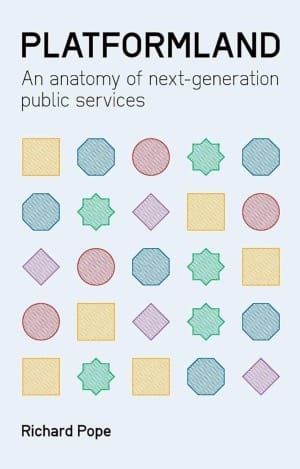
- Platformland by Richard Pope - this one feels almost too on the nose for going to explore civic infrastructure, as it’s primarily concerned with how governments create digital public services. I’m particularly interested in how Pope is articulating the way that public services should not necessarily aspire to the frictionless experience that digital consumer experiences are constantly chasing because citizenship also comes with some obligations that require friction.
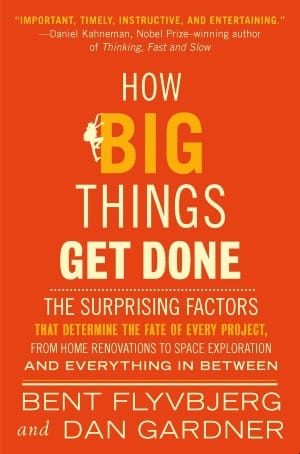
- How Big Things Get Done by Bent Flyvbjerg & Dan Gardner - I’m expecting this one to push on my thinking, because my natural inclination is toward emergent, adaptive processes, and this one is all about the virtues and importance of advance planning for mega projects…but I’m also not so sure that the two things are incompatible. I’m about 25 pages in where the authors are laying out the idea of starting slow to move fast, and I can see how that early deliberate concept development can make room for emergent & adaptive approaches.
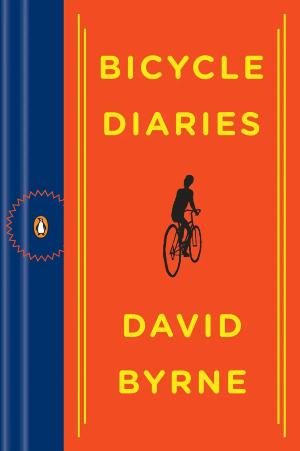
- Bicycle Diaries by David Byrne - a book that I had no idea existed until I was browsing in a used bookstore in Chicago, saw it, and thought, “it’s like someone published a book just for me.” David Byrne - my creative hero - rides his bicycle across various around the world and reflects on what you see when you encounter at the height and speed of a bicycle? A thousand times yes.
A random aside
This isn’t a fully formed idea yet, but did collaborative storytelling exist as a narrative device before Dungeons & Dragons? I’m sure it did in some form, but the particular conventions of tabletop RPG as collaborative storytelling seem to have been a distinct thing that emerged from D&D.
When I think about that distinct thing, I can’t help but feel like it was something radical. It was a commercial product that said, “hey, we will sell you guides, but actually you should make up your own - and if you do that, this whole thing is essentially free to play.” So much of play & story & game is about limitation and control, and D&D certainly operates with constraints but it’s so wildly open. You can play it as a fantasy game, you can turn it into a social commentary, you can make it just an excuse to hang out with your friends regularly.
D&D is essentially an incredibly flexible platform for social connection that is disguised as a tabletop RPG. It endures and holds such deep meaning for so many people because it chose to be so open…and it held that position for long enough that even when the corporate instinct for profit eventually kicked in at Wizards of the Coast - its parent company - there was enough resistance that it couldn’t take hold.
That's it for this month... catch you in December!

Member discussion