
On infrastructure & ephemerality

I'm more New Wave than I am Hardcore. Punk rock by the time I was a rebellious adolescent had already entered its more melodic, more mainstream, pop phase. I still went to punk rock shows and moshed, slam danced, and dove off stages - it just wasn't all that transgressive anymore. You could buy Nirvana t-shirts at Kohls, after all.
And, yet, I still grew up pretty indie. A lot of that came by virtue of living in the large college town of Columbus, OH. College towns, I now understand, come with a pretty distinct culture. Columbus had a thriving alternative newspaper (shout out to the Other Paper), multiple independent radio stations, specialty cafes before they were a thing, arthouse cinemas, and music venues that - by virtue of a 50,000 student university within a stone's throw - could bring in non-mainstream acts.
I've been thinking about it a lot over the past few months. Earlier this year, I heard an interview with the actor and comedian Chris Gethard in which he was talking about the DIY ethos of the punk era - about how a musician or a comedian at that time didn't have a support team around them, so they were doing everything from booking their shows to designing their posters to hauling their equipment. On the one hand, that meant that their artistic existence was precarious. On the other hand, it meant that they didn't have to deal with the commercial requirements that come from needing to sustain a whole team. If you didn't mind having to do it all yourself, the reward was that you could stay weird and keep making the art that you wanted to make.
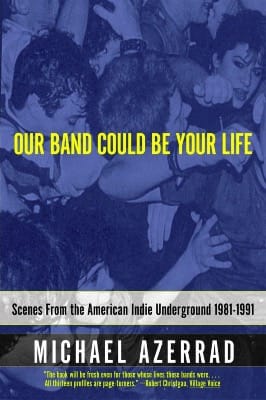
In the interview, he mentioned the book Our Band Could Be Your Life, so I picked up a copy...and I've been reading it over the past few weeks as a way of understanding more of the ethos that said, "let me do my weird thing. I don't need to appeal to an audience. I just need to make my thing" because that sentiment increasingly feels familiar to me.
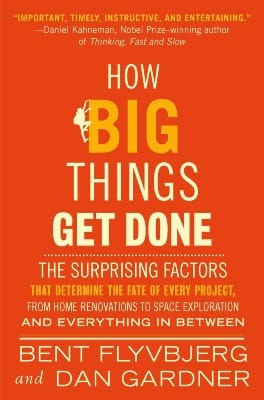
It's a nice complement to one of my other favorite books of the past year, How Big Things Get Done. The latter is didactically describing how to take a playfully experimental approach to ambitious things in order to actually make them happen - it's all about monumental, epic scale work that is complex, complicated, expensive, and essentially collaborative.
Music, though, is a different beast. A single person in a room by themselves for a few minutes can write a song...and while that can be the beginning of a bigger project that could be an album or a band, it can also be a wholly self-contained thing unto itself. And yet, it can still be ambitious and experimental. It can still be deeply meaningful. In fact, I'd be willing to bet that more people on this planet have a song that they think of as profoundly meaningful to them than have a work of monumental architecture that they hold in the same regard.
So I find it kind of peculiar that megaprojects are the default analogy that comes to mind when we think about new projects - always building institutions, something meant to grow and last and endure. Rarely ever doing something that is meant to have a short shelf life, that's meant to shine brightly for a short period and then burn out or just slowly fade. Even when I think about the things that seem like they are ephemeral - short form content on places like TikTok - they're all still trying to build something to last: content that can be financialized as intellectual property, a follower base that can be leveraged for brand partnerships. They're all mini corporations (or aspiring to be).
And then I think about how bands that I know by reputation as being pretty legendary - bands like Minor Threat, Husker Du, and Sonic Youth - were playing shows to 10 and 12 people for the vast majority of their existence including in the periods when they were making their most ambitious work. I read about the musicians playing so rapturously that their hands would bleed from slamming into the metal guitar strings with such incredible force.
I see that ethos as well in Mike Monteiro's recent essay about the human inclination to make things, which I swear didn't just get my attention because it prominently involves donuts (but it didn’t hurt…and I did go out and buy some donuts after reading it). In the latter third of that essay he starts into - and then kind of backs away from - this question, "is what we really want to make just money?" And I wish he would have been more vehement in insisting that making money isn't actually making at all. Even the people who excel in maximizing the worst systemic failures of hypercapitalism aren't just making money - they're making vehicles of financial engineering. I'd argue that most of them didn't figure out financial engineering because they wanted to make money, but rather they were drawn to making the complex abstract models that turn out to be pretty good for financial engineering and realized that the thing they get some satisfaction from making could be used for obscene wealth accumulation…and then maybe making money becomes an end unto itself, but that isn’t where it started.
At the same time, I get why the DIY approach to making things doesn’t always seem attractive. It was a precarious line to walk - addiction frequently rears its ugly head in the book, and it seems like nearly every character got into aggressive shouting matches with even their closest friends and got into fistfights at their shows (then again, these issues wouldn’t be insane to hear about inside of some private equity and hedge funds out there either). Some of the bands actually did care about finding their way to major labels so they could get enough distribution to make ends meet and keep making their music instead of needing to find a daytime gig. But some of them were also insistent that they didn't want to let their music be anything other than the thing that they made because of passionate commitment.
I have a pet fascination with infrastructure, and that kind of making feels like it’s in tension with - though not opposition to - the big, societal aims of building infrastructure. The controlling question that has guided the projects I've worked on for the past half decade or so has been about what infrastructure is necessary to catalyze and sustain a creative society. Infrastructure is megaprojects...and I'm not ready to leave that question alone (in fact, when the Singapore essay drops, it's such a huge part of that - the way that having things like stable housing and food security are enablers of creativity and how that kind of flies in the face of the suffering/starving artist myth), but I'm also more and more inclined toward the counterballast, the thing that infrastructure makes possible: the projects that are small and contained, that don't have any concern for being commercial or viable or sustainable for any extended period of time, but that are cherished by the people who make them and the people who experience them.
I told my therapist recently that I feel more punk in my 40s than I did in my adolescence, and she asked me what it meant to me to be punk: was it about putting on loud music and thrashing around? was it about presenting in a way that thumbs its nose at social convention, painting my nails or wearing a skirt? But it isn't either of those things. I'm not a nihilistic, anti-authoritarian punk (well, maybe a little anti-authoritarian). I'm an expressive anti-commercialization punk - I am not at my core a consumer, but I also recognize that the counter to that isn't merely being a producer but being a participant in a community that is actively shaping the world...and a lot of you reading this, whether or not you identify as punk, are part of my community.
So let's make some weird, interesting stuff together. K?

Member discussion