
Singapore, part 1: Playgrounds & Creativity
Well, finally I'm dropping a write up of my visit to Singapore. It's been 5 months since I returned, and as early as January I thought I'd have something to share...and every month, I was wrong. This has turned out to be a pretty significant undertaking that resulted in a 6,000 word essay - by far the longest thing I've written here. I've turned it into 2 parts. This is part 1, and part 2 is here.
A Wake Up Call
When I read that the results of the first PISA in Creative Thinking[1]had dropped and that the small city-state of Singapore had blown everyone out of the water my interest was piqued.
Back in 2017, I had spent a week in Singapore doing some work with Nanyang Polytechnic University because they wanted to apply more creative and progressive pedagogies in designing deliberate learning experiences for their students. Throughout the week, I heard a common refrain from almost everyone I spoke with:
Singapore got to where it is today because the country was great at process optimization, but to get to its next stage of growth it needed to become more creative.
Less than a decade later to have their education system - historically considered to be one that was more focused on cramming knowledge - come out with such an impressive result was a surprise that caught me off guard.
I won’t lie - my first reaction was to question the test. Because, after all, how does one quantitatively assess creative thinking? Not that there aren’t ways, just that the ways haven’t been something that the standardized testing industry excels at. So I started reading up on the test itself, looking at some of the example tasks involved, looking into the conceptual basis for it…and it passed the smell test.
My second reaction, then, was to wonder: is it possible that this country that is known for process optimization figured out how to optimize the process of preparing for this particular test? But if so, how would one even know? And how would that process optimization look different from actually just developing better creative thinking skills? That was a lot more difficult to define.
So I decided that the only way to learn more would be to go there myself and see what was going on. In preparation for my visit, I reached out to my friend Min to get her perspective. She grew up in Singapore, and her family is still there, so she has a clearer perspective than I do about the country's history and present. When I explained the PISA story to her, her first reaction was the same as mine: how valid was this test really? But her second reaction was different from mine and gave me a significant reframe for how I was exploring this question, because her mind went beyond the mechanics of testing to the conception of creativity in the first place. She drew a distinction: was this creativity like big vision, big idea ideation; or was it practical methods for solving novel problems? The latter was something that she expected Singaporeans to thrive in because solving practical problems is what they do, it was part and parcel of how you build a stable, prosperous nation from nothing in under a century. And, as it turns out, that is exactly what the PISA measures.
But she also mentioned that Singapore's education system was going through a transition. What had been a system with an intense focus on grades and test results was reorienting to consider more holistic development of the learner. I could find very public examples of project-based learning becoming a standard pedagogical approach, and Min confirmed that the schools were even working with government ministries to create real-world projects for students to work on related to Singapore's development priorities. She also mentioned that they were deliberately including social emotional wellbeing as a focus area in the schools.
That emphasis on practical creativity also highlights one of the tensions of Singapore: it is at the same time both bureaucratic and entrepreneurial.
Having now come and gone and sat with this for several months I want to float a theory: Singapore - a nation that was forged by centralized control & bureaucratic standardization - has plunged itself into an experiment to hold the tension between the benefits of bureaucracy and the messy richness of culture and identity. The question that Singapore is posing and that I suspect others will need to grapple with is "what is a humanistic bureaucracy?"
Maybe this is where I need to tell you about the playgrounds and the way they bring this theory to life.
Playgrounds as public good
"Play intrigues me" is an understatement. One contributing factor to my fascination is the way that environments for play evolved through my formative years. In my early childhood, playgrounds were pretty simple affairs: slides, monkeybars, swings of both the regular and tire varieties. They were bulky wood and metal configurations where the odds were decent of getting a minor burn in the summer or a splinter any time of year. The nice ones were placed in the middle of a ring of mulch; most of them were anchored in blacktop.
Somewhere around the age of 8, new playgrounds started springing up. First there was the elaborate wooden castle at the local elementary school. Then there was the sprawling collection of multi-colored abstractions that appeared at our local park. Both of them were delightful for me, both because there were so many different things that I could do within their confines and because they presented a canvas for more complex imaginative play. That's not to say that the older, more spartan playgrounds somehow hindered imagination; as far as canvases go, though, they were more about filling in negative space. The new playgrounds suggested new directions and imposed different kinds of constraints. As Yi Ning writes, "Playgrounds are never just about play. They're about what kind of childhood we want to create, what relationship with place we want to foster, what values we embed in the architecture of growing up."
I loved the wooden castle, but in the game of survival of the fittest, it was destined to lose out to the fiberglass elements of the abstracted shapes: the latter was more modular - the wooden castle was an epic painting, the abstract shapes could be made in miniature or in massive scale because they were modular combinations. I suspect they were also less expensive because they were easier to mass produce.
And while they were made up of standardizable components, the combination of those elements allowed for limitless forms. When a new playground opened up, it was proposing a new experience based on the choice of elements and their configurations. Going to a new playground was an experience that invited and encouraged exploration.
And the truth is that I went to Singapore because of the playgrounds. Early on in my research, I found myself deep down an unexpected rabbit hole about Singapore's playgrounds and how they were representative of the country's development - modernization and urbanization, yes, but also the formation of a shared identity. The conscious definition and cultivation of a national identity was something that I hadn't noticed on previous visits to Singapore but that I couldn't shake this time around...and that I believe now is a vital reason for the complicated relationship that the nation is developing with its bureaucracy. The playgrounds are important, then, because they show how that identity development begins early in childhood, and the changes in the approach to playgrounds reflects the evolution of the national identity.
And this is where I have to pause just to say, you can easily bypass everything I've written below and skip to the next header because literally everything about this visualization and article from the Strait Times is so impeccably well done. Like, I've gone through it multiple times and it still fills me with delight[2].
 Mr MONTY CHRISTIANSEN, playground inspector and trainer Project Eyeball article published on 15 Nov, 2000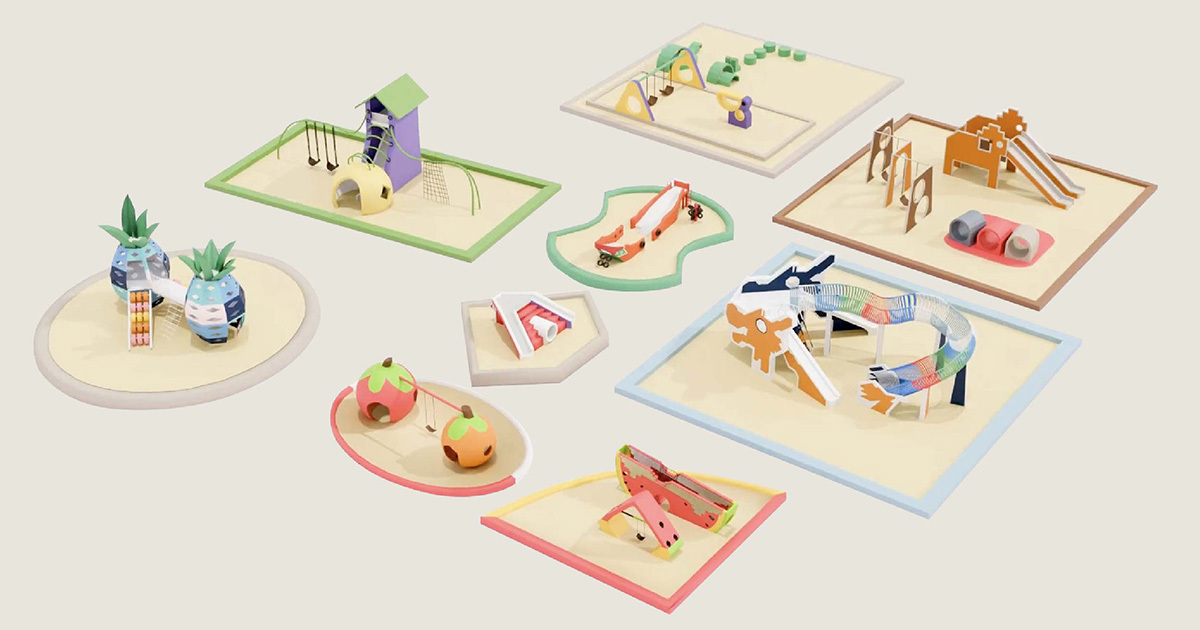
Playground building in Singapore has been a national project going back to the 1970s as the space-constrained nation began to expand vertically. What started with functional, utilitarian apartment blocks gave way to more variety beginning in the early 1970s. An architect at Singapore's Housing Development Board, Khor Ean Ghee, was responsible for the landscaping and playgrounds of these new spaces. Initially, the design inspiration all came from the western styles that had been pretty static since the beginning of the 20th century - the same kind of elements and layout as what I experienced as a child.
That didn't last very long, and the point of inflection shows that the seeds of dissatisfaction with bureaucracy were planted early in the nation's development. Because Singapore did indeed standardize, because standardization and efficiency were the only way for the country to modernize at such a breakneck pace...but at the same time, Singapore also was defining a national mythos and shared cultural identity drawn from the different cultural traditions of its population - out of the influences of Cantonese and Malay and British and Indonesian, the nation wanted to define what it means to be Singaporean.
Ghee's revelation, then, was that the playground as a focal point of the communities that were forming around the new apartment projects were also a focal point of cultivating that shared identity[3] . So he did something pretty inspired: instead of continuing to build generic western-style playgrounds, he and his team began designing animal-themed playgrounds that used metal, concrete, and tile to create the forms of various familiar fauna. Out of that work, the dragon playground emerged.
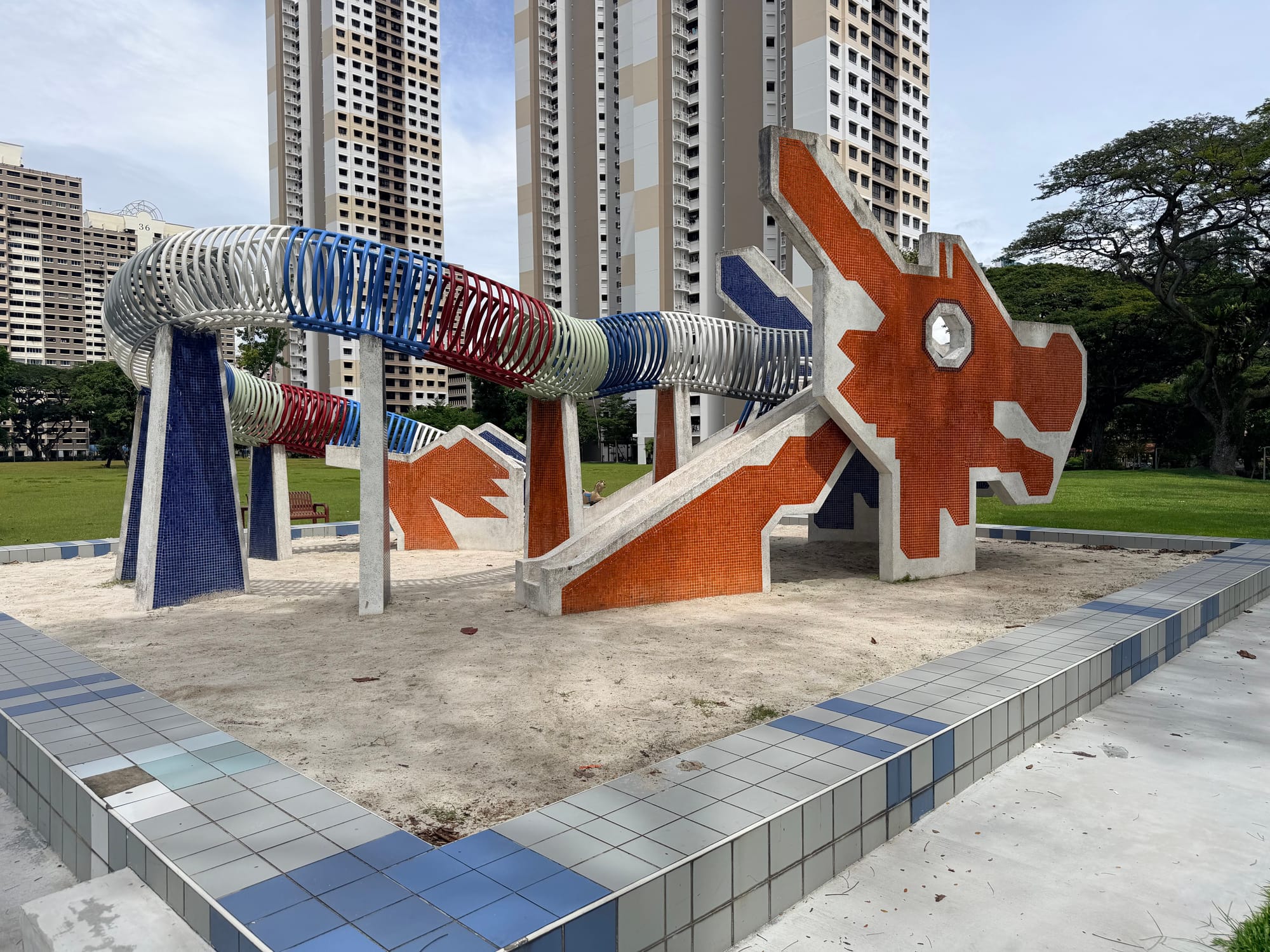
I get shivers every time I see photos of those dragon playgrounds. They just look so cool. So totally distinct. So fun. For Singapore, they also had historical symbolism around the role of the dragon in Chinese culture.
So throughout the 1980s, the dragon playground aesthetic was applied to a variety of new playgrounds based on symbols of what it means to be Singaporean - crabs and tropical fruits and, of course, more dragons.
But then the same phenomenon that young Seth was experiencing in the US hit Singapore as well. While the mosaic tile playgrounds in Singapore were distinct and were being fabricated locally, they were also not the most child-play friendly and were a pain to make. Singapore shifted from mosaic playgrounds to "adventureland" playgrounds - the plastic and fiberglass modular structures that were produced outside of the country. The completed playgrounds themselves were actually less standardized than the mosaic playgrounds, of which there were a dozen or so different designs that had been replicated multiple times, but they represented a different kind of standardization - what C. Thi Nguyen refers to in The Score as the standardization of parts, making things interoperable and modular so that they are easier to build and maintain, so that they require less singular genius and more of a general competency. Indeed, these playgrounds were made up of modular, connectable components that could be fabricated en masse and assembled in almost infinite combinations.
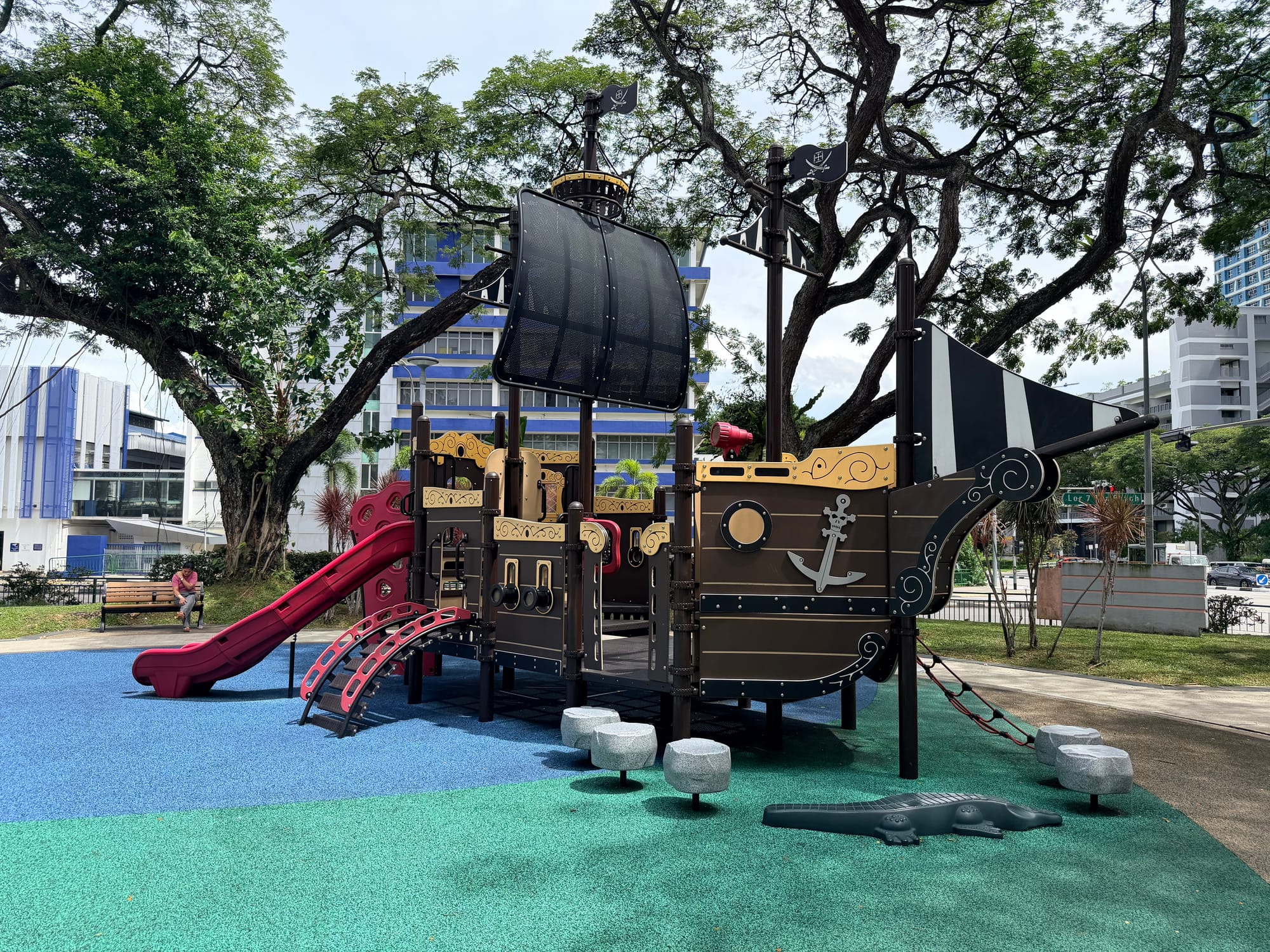
There were still attempts to build themed playgrounds in this format - while I was in Singapore I saw pirate ship themes and vehicular themes - but the tradeoff to move toward the standardizable elements meant the loss of a visual design style that was culturally distinct and conveyed a uniquely Singaporean identity. By the early 2000s, the adventureland playgrounds had become the dominant design style in Singapore's housing projects.
By this time, Singapore itself had changed. When Khor began developing the mosaic playgrounds, the nation was a scrappy underdog in the process of establishing itself. By the early 2000s, it was a significant player in the global economy - one of Asia's major financial hubs...but it was also shook. It had survived the Asian Tigers financial crisis in the mid-90s, but that was where the seed took root that maybe the kinds of things that contributed to success in financial engineering weren't sufficient to maintain a position of strength, especially as other emerging nations were taking a page from the Singapore playbook and trying to brand themselves as "The Singapore of (fill in name of geographic region)"[4].
This is worth pausing on for just a second, because the ability as a frontrunner to forecast ahead and see how things might change in a way that turns what is currently a winning position into a deficit is incredibly difficult. In fact, let's give that a longer aside...
An aside: creativity and felt needs
I'm going to return to the PISA for just a second and to the idea of evaluating creative thinking. As I've turned this over in my mind and as I spent time in Singapore, I started to consider how we calibrate our ideas of creativity against Maslow's hierarchy of needs.
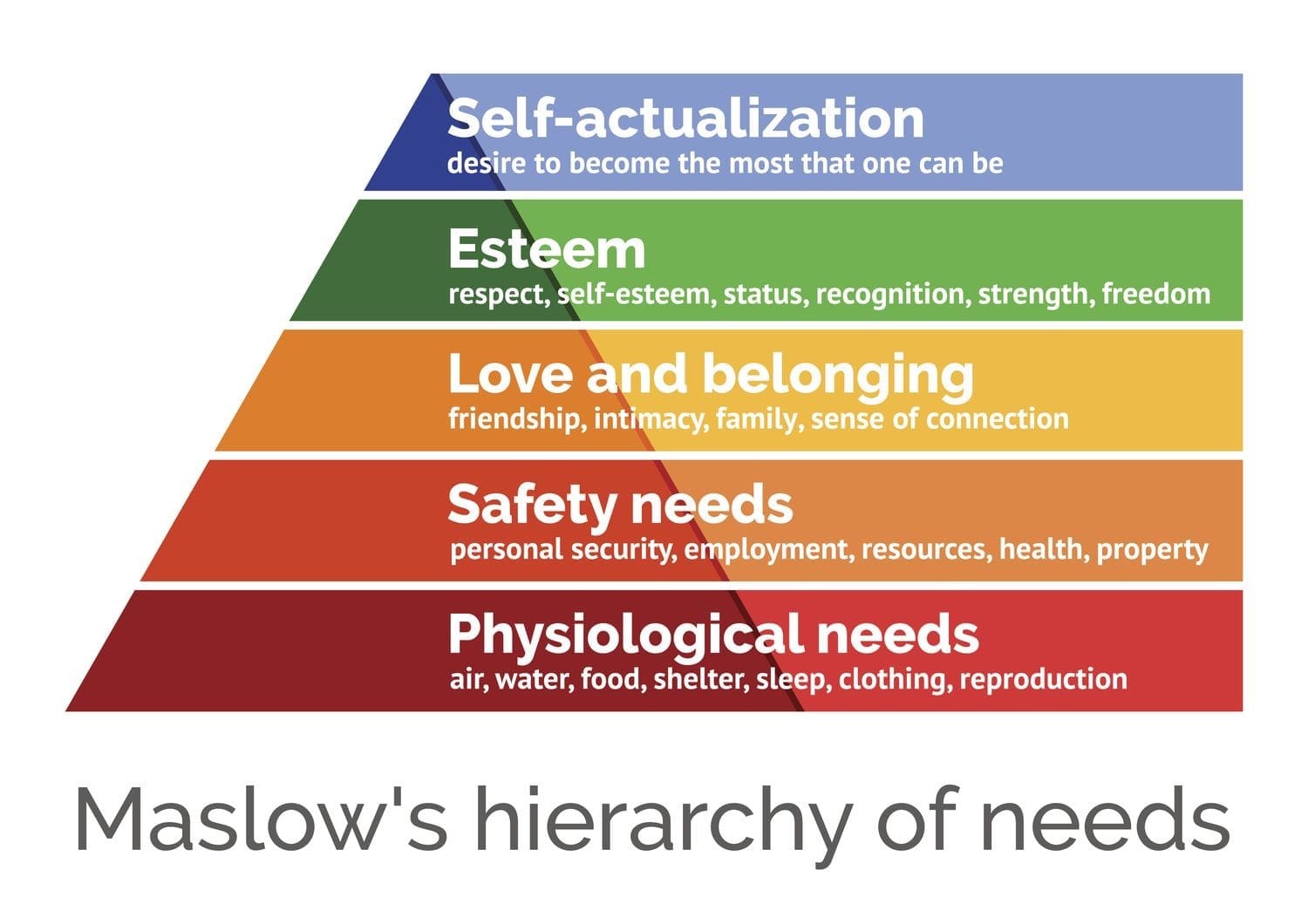
The kind of creativity that is most prized and valued at the bottom end of the hierarchy is a highly functional, highly practical kind of creativity - it's the creativity that meets survival needs. As an individual - and I would go so far as to say a society - moves up the hierarchy, that kind of creativity doesn't go out of style so much as it creates space for more expressive and exploratory forms of creativity. At the lowest levels of need, there's not a lot of margin for error. That drives a kind of relentlessness and hustle that can absolutely breed creativity. Higher up, though, the most fundamental needs are being met, and there's more margin which can be spent on activities that don't feel necessary.
This matters because this is where the distinction between creativity and innovation occurs. Some basic process innovation - innovation focused on optimization efficiencies - can happen at the lower levels just above survival, but the earliest stages of breakthrough innovation is wildly efficient in both time and resource. It needs that cushion that allows for more open exploration.
Back to the playgrounds
That early 2000s shift in identity was a critical point where my central thesis starts to play itself out in the open. Singapore's made a decision to pursue a more creative economy and to build on its strength in using creative problem solving for process optimization to expand into more expressive and exploratory creativity.
And wouldn't you know it, that also marked the third phase of Singaporean playgrounds.
It wouldn't be accurate to say that Singapore abandoned the adventureland style playground in the same way that they did the mosaic playground. HDB kept building them - as did a bunch of the malls and shopping centers that were becoming commercial communal spaces - but they also expanded in 2 new directions:
- preservation of the remaining mosaic playgrounds
- prioritization of new monumental playgrounds
Both of these were a move toward asserting an aspect of Singaporean identity that was expressively creative. The latter was a particular effort to make a statement about novel expression against standardization.
What is interesting about the preservation of the mosaic playgrounds is how it was more than just maintaining and restoring the physical structures; it was really about establishing the design language of those playgrounds as symbols of the nation. This comes through most explicitly in the recognition of the dragon playground as one of the 50 Icons of Singapore on the occasion of Singapore's 50th anniversary and the somewhat revisionist explanation of what the dragon playground stands for:
Playgrounds such as these are reminiscent of the laughter and cheer around the heartland neighbourhood. ... the dragon playground stands as an important symbol of childhood free-spiritedness. (credit to Justin Zhuang)
This is how the dragon playground became an icon. Even though few of the playgrounds themselves are still around, the image of the playground persists on t-shirts, pins, mugs, signs and exhibits in Singaporean public spaces, and so on. In counterpoint to the reputation that Singapore had developed for being straight-laced, clean, and business-like it invited its young citizens to consider this sense of free-spiritedness as it began to invest into its creative economy.
Alongside that was the rise of the monumental playgrounds[5]. A select number of Singaporean playgrounds in the last 10-15 years have come in for monumental treatment: they each have distinct concepts - often related to reinforcing some sense of national identity - and accompanying designs that aren't bound to a common design language or approach, that aren't stuck in the materials or manufacturing approaches of the adventureland playgrounds. These are playgrounds that are each meant to make a unique statement both through their design and through the locations where they are erected.
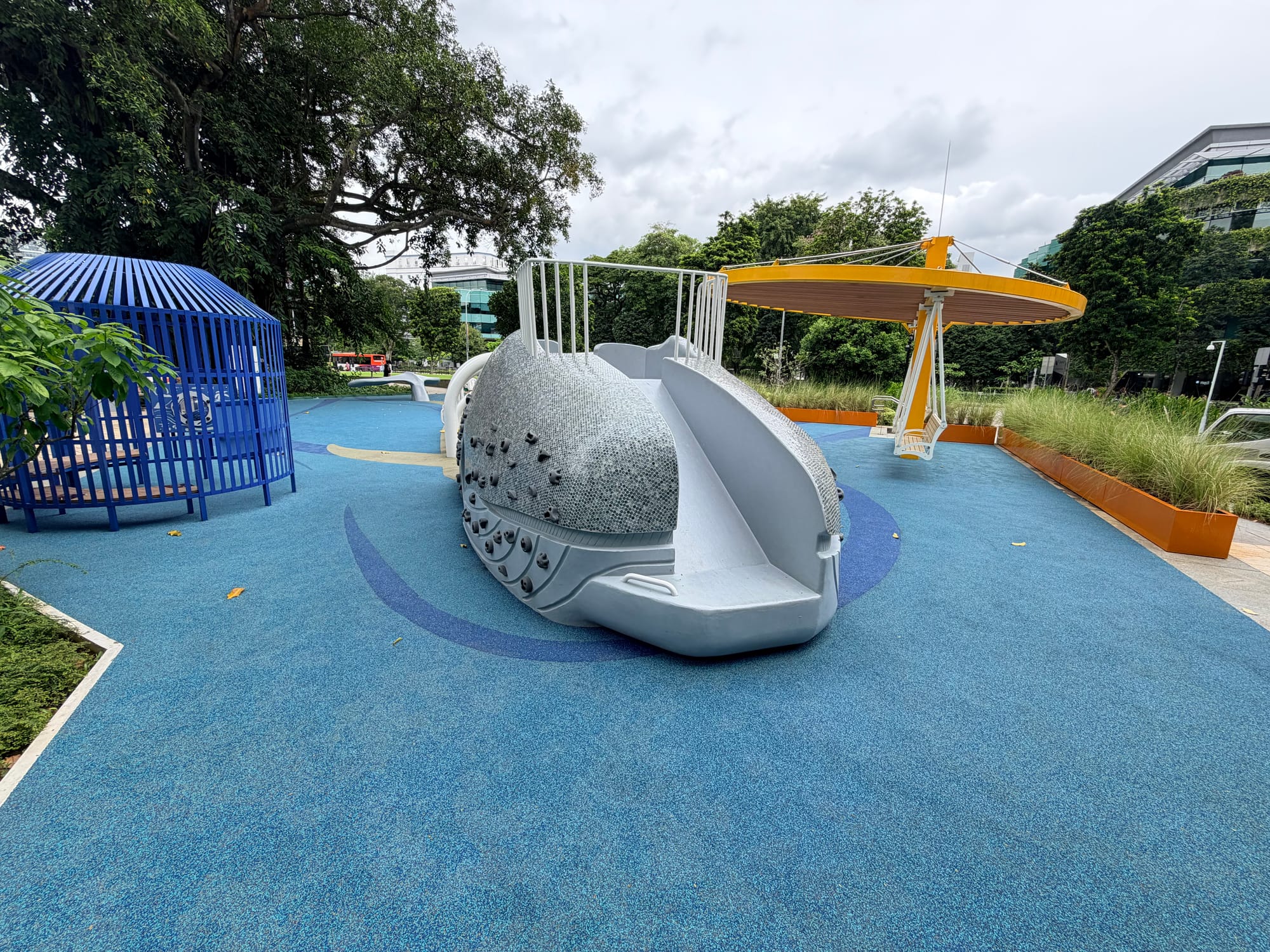
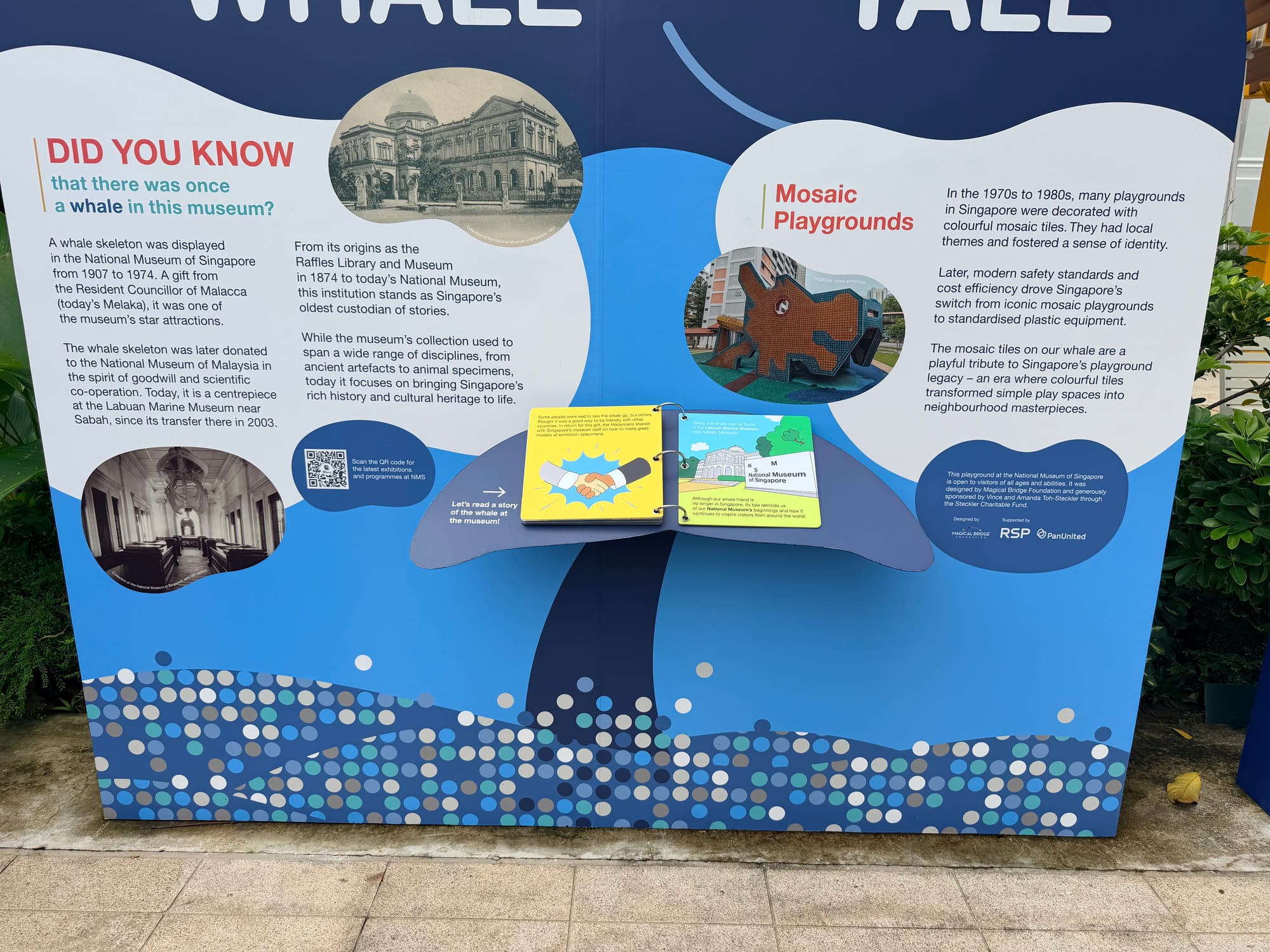
Two things are true about these playgrounds at the same time:
- they are jewels. The designers of these playgrounds had clear vision of their purpose and goal. They had access to substantial resources. Each one of them stands out and is memorable. They do indeed tell a story of who Singapore is.
- they don't get nearly as much use as the adventureland plagrounds.
Now, this is just my anecdotal experience, but I visited several of these playgrounds in mid to late afternoon during weekdays in late December. Maybe they get more use on the weekends. Maybe schools running on a January-November calendar meant that lots of kids and families were already gone...but I saw both monumental and adventureland playgrounds, and the latter always had at least a few families worth of children playing on them and the monumental playgrounds were often empty. At one of them - the Buona Vista playground - I wrote a note to myself, "Who is this for? It says ages 5-12, but it's nestled among office buildings and no residential development is even close." I was particularly conscious of this because, as you can see in the photos, I was deliberate about not including children in my pictures...at the monumental playgrounds, I could take pictures to my heart's content. At the adventureland playgrounds, I had to wait and find quick moments when one group of kids was leaving as another group was arriving.
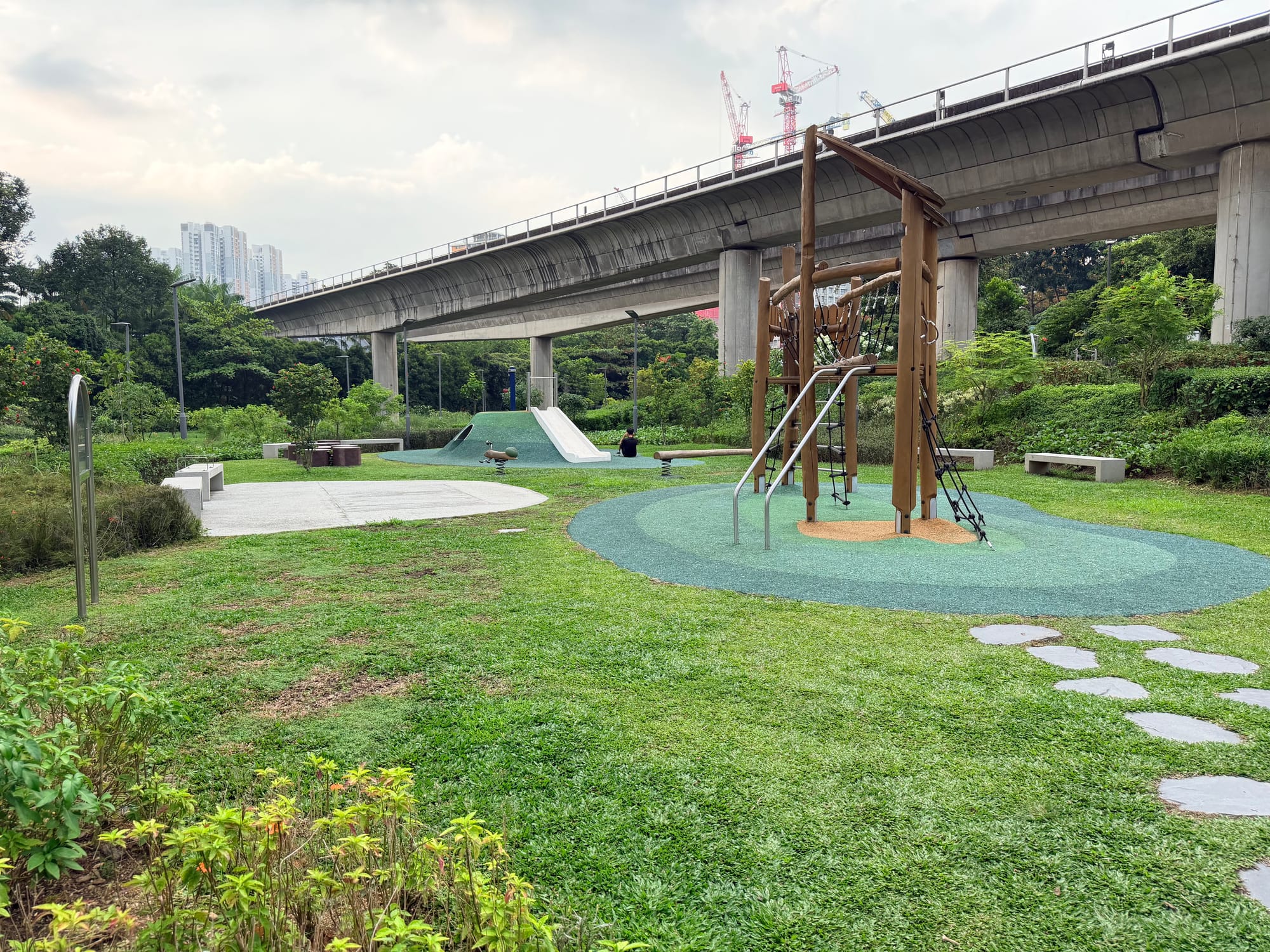
In hindsight, I find the lower usage of the monumental playgrounds less surprising: adventureland playgrounds are woven right into the social fabric of day to day life, whereas the monumental playgrounds are built at significant sites[6] - places that require an intention to visit.
One playground, however, resisted this phased categorization. It sits somewhere between the adventureland and the monumental playground...but it doesn't come from the time of transition between them. In fact, it's the most recently build playground of any that I visited and maybe reflects a new fourth phase in Singapore's playgrounds.
The River Crab playground draws elements from all of the prior phases, but it also introduces a new dynamic:
- it draws on a symbol of national identity as in the dragon playgrounds.
- it uses the fiberglass and plastic mass produced elements as in the adventureland playgrounds.
- it emerges out of a deep design process to develop a particular concept that is specific to its location as in the monumental playgrounds.
- but this playground came out of a deliberate community-driven design process that engaged over 2000 residents of the housing development and out of which the crab concept emerged and many of the specific elements of the playground itself were designed.
Of all the playgrounds I visited, this one is the most fun imho. It is a playground that feels playful, and I could see that as well in the way that people were using it.
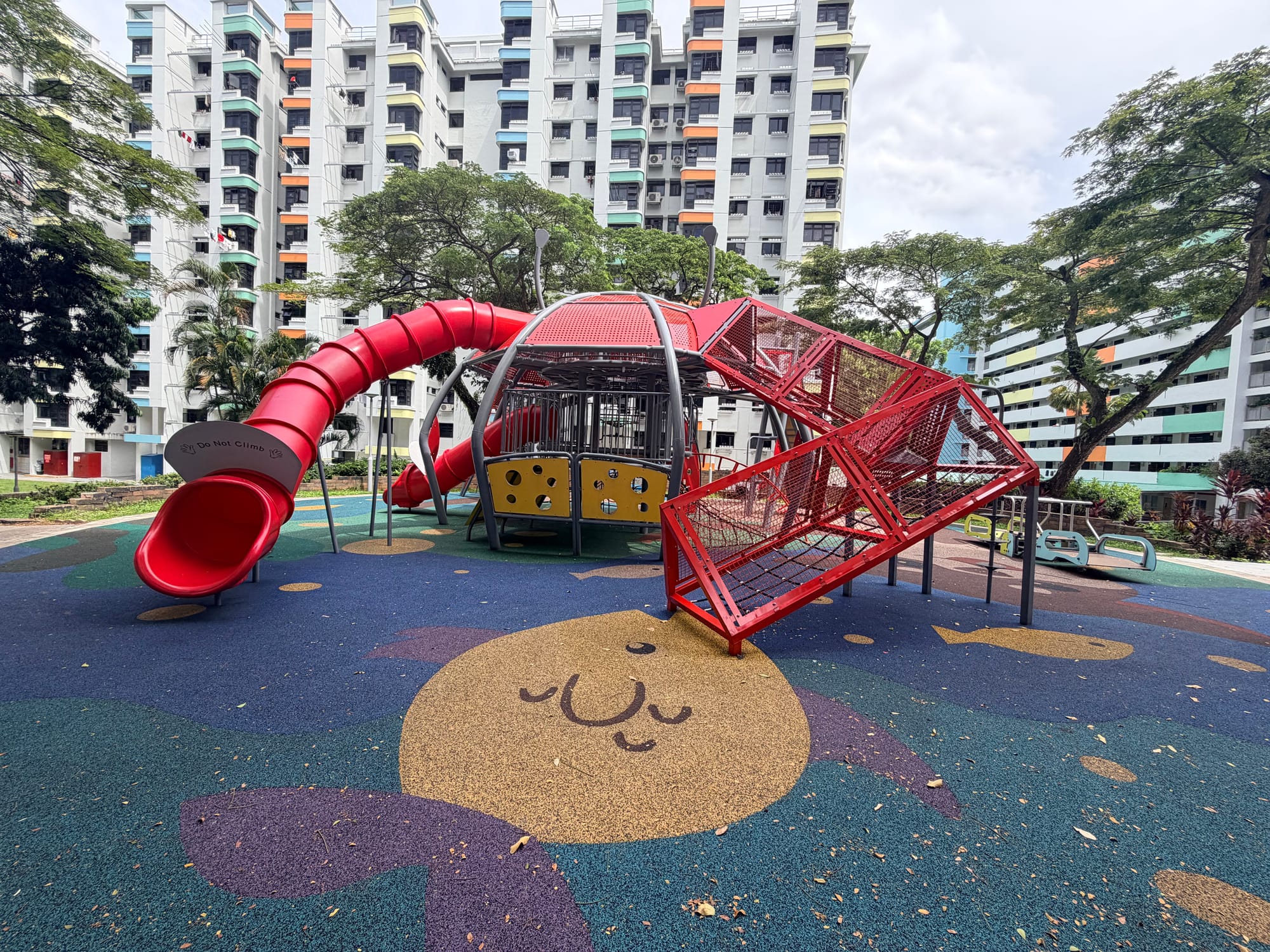
Beyond fun, though, it's a clever trick that the HDB is pulling off with this design approach. In the earlier phases of playground development, there was a top down approach to defining these symbols of national identity. In this phase, the community is not the recipient of the message about identity but the declarer asserting who they are in a way that extends beyond just the superficial aspect of the symbol and into the way that they've brought that symbol to life. The design of the playground adds meaning to what the symbol stands for.
Connecting this back to the main idea behind all of this, this new design approach is reflective of an emergent humanistic bureaucracy - it's not a bureaucracy that standardizes to control, it's a bureaucracy that is moving beyond standardization to respond and be reshaped by the people. People are not subject to the bureaucracy, but the bureaucracy is subject to the people. If you look closely enough, I think that intention has long been present in the structure of the nation...and maybe even when it wasn't intentional, the conditions were still being put in place.
Up next - Part 2: Palaces for the People and Principles of Public Good
- the international standardized test that’s used as the basis of comparison for education between different countries
- And if you really want to go down the rabbit hole with me, the Singapore Art Museum's essay on the Dragon Playgrounds and how they eventually contributed to Singapore's approach to design and the creative economy is well worth your time.
- Remember Singapore, "A Dragon Quest – Searching for Singapore's Lost Dragon Playgrounds"
- see also, Dubai - the Singapore of the Middle East, Mauritius - Africa's Singapore, Rwanda - also Africa's Singapore
- I haven't seen this phrase anywhere else to describe the current phase, but it fits in with the idea of monumental architecture for better and for worse, so that's what I'm calling it.
- Botanic Gardens, the National Museum, the Gardens by the Bay, etc.

Member discussion