
Singapore, part 2: Palaces for the People and Humanistic Bureaucracy

This is the second and last part of my write up of the humanistic bureaucracy in Singapore. Part 1 on Playgrounds & Creativity is here.
Palaces for the People
I came to Singapore for the playgrounds, but the playgrounds weren’t what captivated me when I was actually there. They weren’t the thing that I couldn’t shut up about for weeks after I left.
I wasn’t ready for how smitten I would become with Singapore’s libraries.
In truth, I ended up spending more time in public libraries in Singapore than doing anything else, but I ended up there almost as an afterthought. I hadn't even added the main branch of the Singapore library to my Google Map before I left, but after a briefer visit to the National Design Centre than I had expected I couldn't help noticing it right there across the street. It was, it must be said, a behemoth rising 13 stories above the ground. I probably would still have been drawn to it like a moth to a lightbulb if it had been less imposing because I love libraries, but seeing a structure of that size I knew there was going to be something special about it. One does not just build an enormous architectural gem of a library to house books[1] .
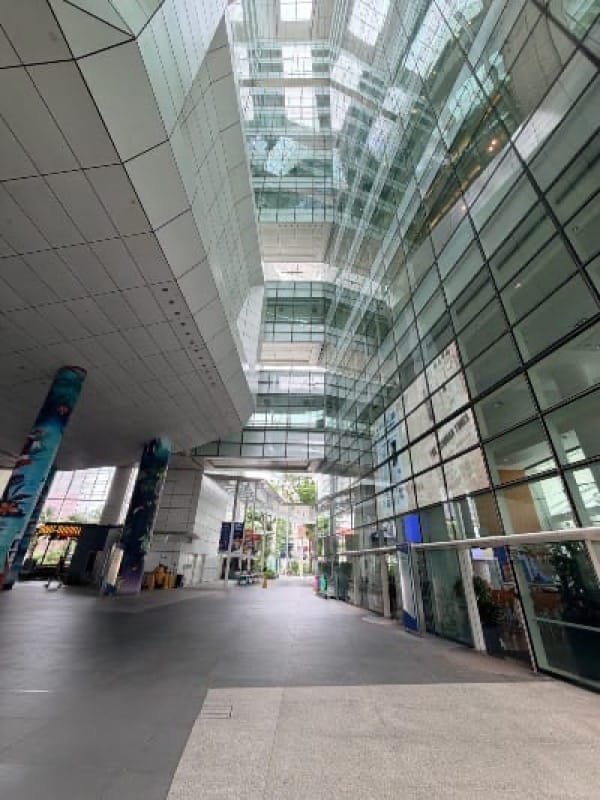
What I noticed before even setting foot inside the library, what I noticed as I walked along the plaza leading to the entrance, was people. People were there hanging out. Inside the library, people everywhere! This was a random Wednesday afternoon, nothing special about it. But everywhere I looked, people were making use of all of the facilities that the library had to offer. There were rehearsal rooms for practicing music. There was a large maker space. There were classrooms offering workshops. Research carrels. Areas to sit and read. They weren't all occupied, but probably 80% of them were? The library was getting used for all kinds of library things.
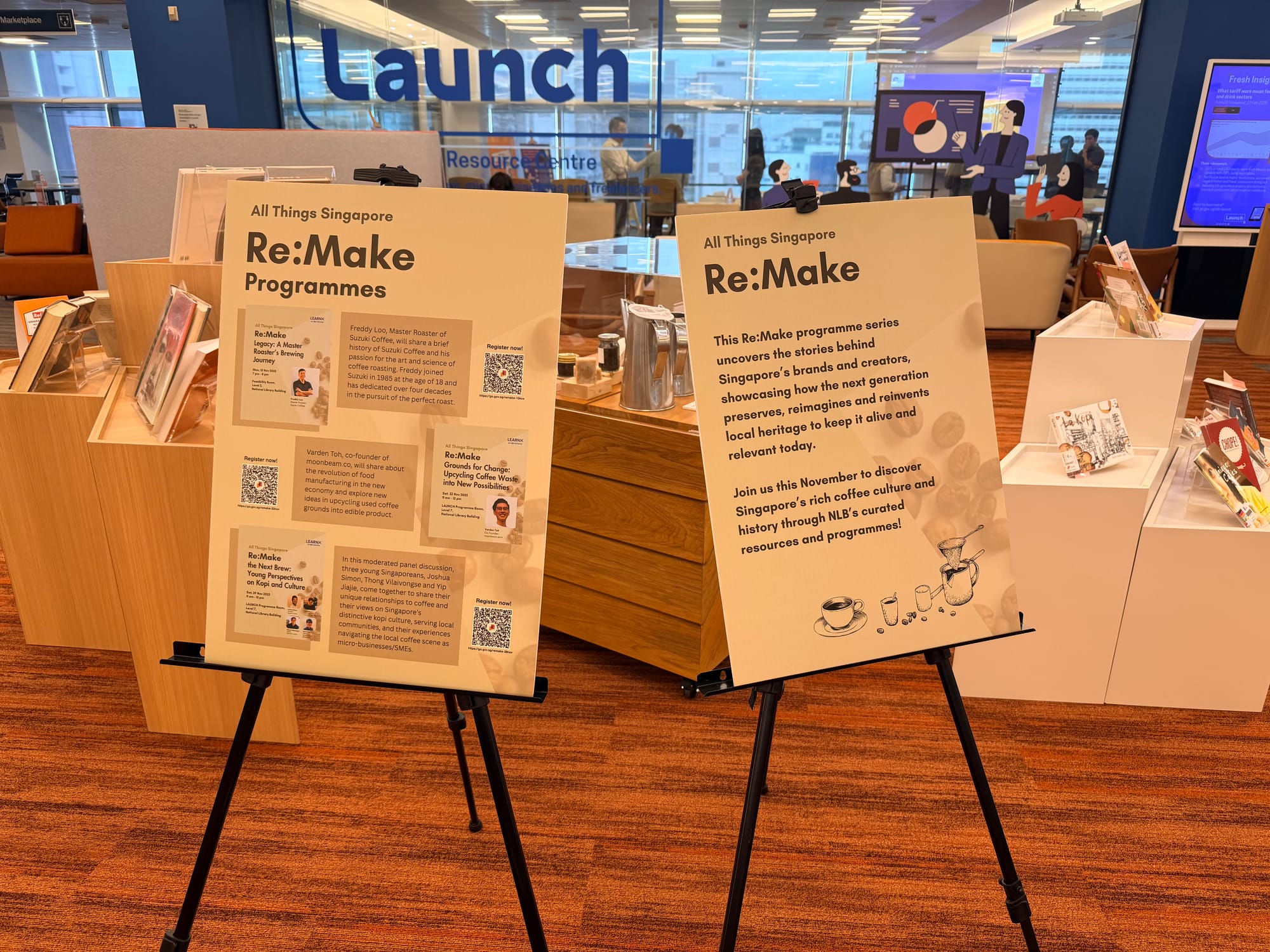
And I mean that in the most modern sense. The contemporary library isn't just for books & card catalogs; today's library serves a dual purpose of acting as a physical place for the storage and curation of knowledge. Singapore defines its own mission explicitly: Inspiring discovery. And it bring that to life with a focus on encouraging creativity and entrepreneurship.
The best description of libraries that exists is "palaces for the people;" it's an evocative phrase both because it has that great alliteration but especially because both of those p words carry such weight and meaning: when I think of great libraries, I think of monumental structures that are beautifully and impeccably designed down to the last detail. I remember the massive renovation of the library in the small suburb where I grew up that resulted in a glass enclosed atrium that provided a true sense of arrival and the reading room in the Nashville public library with vaulted ceilings and columns surrounding cherry wood and green lamps. In my own adopted hometown of Utrecht, our library was converted from the old post office and has a cafe with a view overlooking the canal. A great library is a space that one feels pleasure and privilege to set foot within. But unlike most palaces, these are palaces for the people. They are not held out of reach or rationed. They aren't "look don't touch" mausoleums to a dead past. In the American context, I think a lot of people consider their libraries as places where unhoused people spend a lot of time...and that is wonderful. A great library declares that we all are intrinsically worth having a beautiful space in which to pass the time surrounded by generations worth of cultural riches.
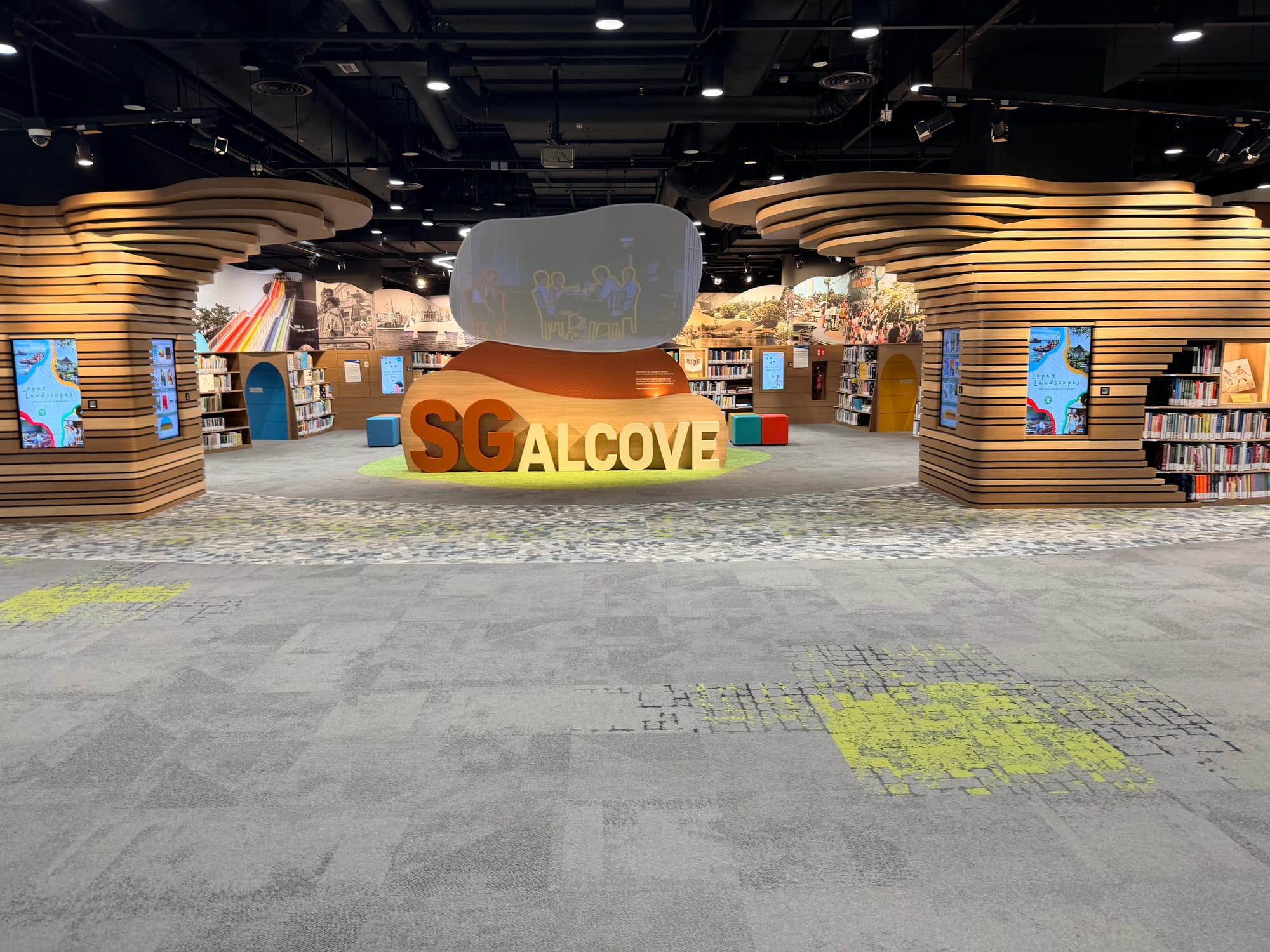
And in Singapore I saw that phrase "palaces for the people" fully realized; this is what civic infrastructure should look like - beautiful, accessible, abundant, and welcoming.
A Tangent
I have often said that if you had to choose one group of people to rebuilt society around, you should choose librarians because they're the best people. I learned recently that prior to his political ascent, Mao Zedong was trained as a librarian, so my feelings about that sentiment are a little more complicated now.
Inspiring discovery?
"Inspire discovery" is a great tagline for a library system. It's easy to think of libraries as serving some sort of mechanical function, like helping people find books & other media. And that's a thing that's happening! In fact, just the other day I saw this video from the Singapore Library on TikTok and thinking about how much I'd love to see this in my own local library[2].
@nlbsg Bukit Batok Library is back, bigger and better than before! 🎉 Find out how you can get hold of your favourite reads 📚 with new library features such as Scan-n-Discover ⁉️ and Infinite Shelves! ♾️
♬ original sound - NLB Singapore - NLB Singapore
Came upon this one recently, immediately seethed with jealousy.
But it goes much deeper than that in the Singapore library system. Again, it is a thing that is connected to a broader project around the idea of creating a shared identity: helping people find media and information is a form of inspiring discovery that places discovery out in the world, but what happens in the Singapore library also helps its patrons to discover what is inside of themselves. This is the virtuous cycle of discovery:
a recognition of something inside of us inspires a desire to explore or understand that causes us to look outside ourselves, and finding things in the world that resonate with what's inside of us we're inspired to explore and understand more.
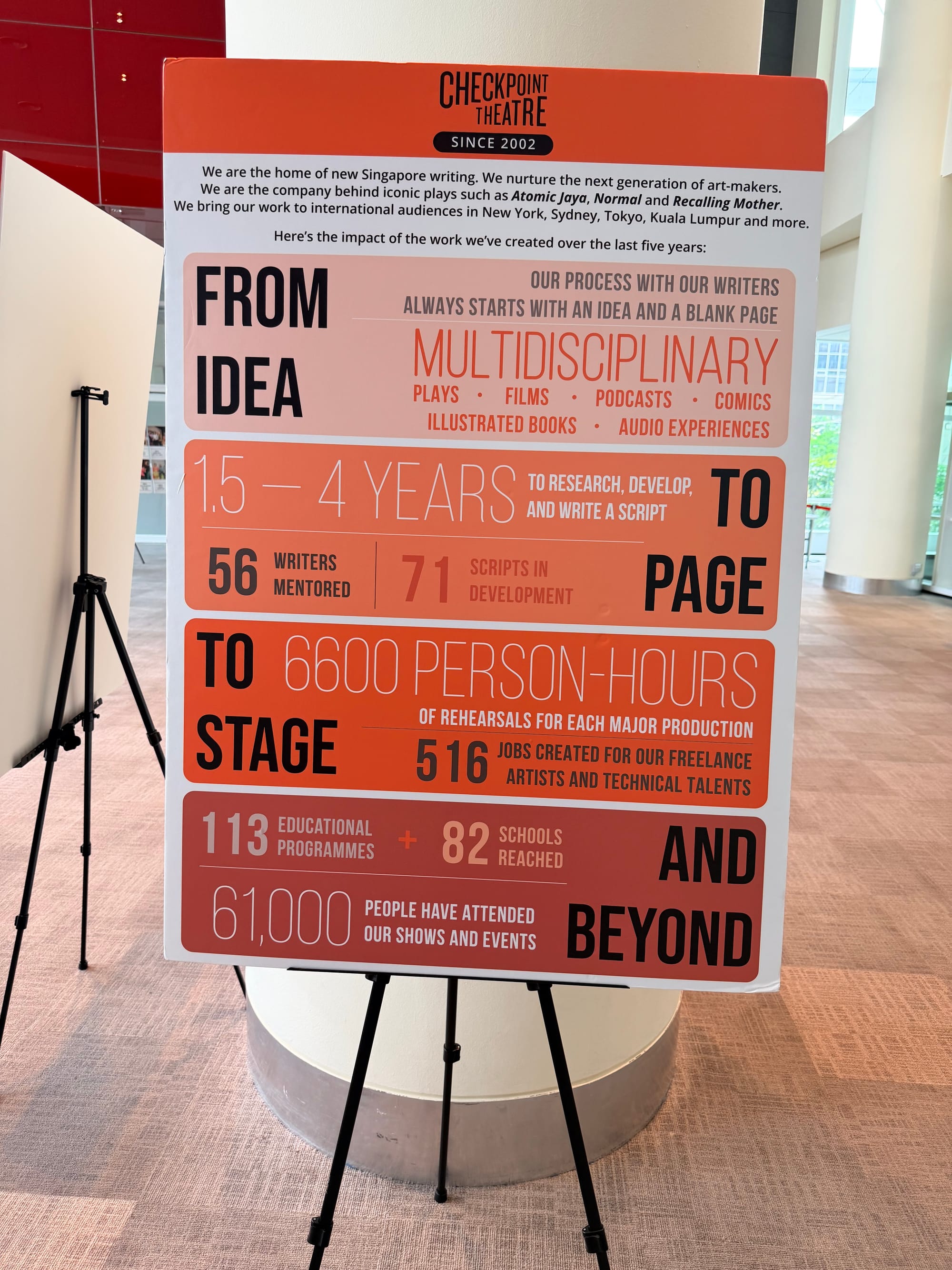
It doesn't matter where the point of origin; sometimes it's internal, sometimes it's external. But sustaining and deepening it requires the interaction of both sides. And that's what I saw the library doing. The national identity project was at work: every branch of the library I went to had visible, significant collections about the nation's history and culture. The main branch plays host to a theater company that performs original work written by Singaporeans about what it means to be a modern Singaporean. There is a makerspace, an entrepreneurship resource center, classrooms that host classes on various topics[3]. I don't think any one of these features is novel or revolutionary. I can tell you the main branch of the Los Angeles Public Library has an excellent makerspace. I can tell you that libraries the world over host workshops and performances. Where I think Singapore has excelled in making these kind of public services accessible.
And, skeptic that I am, I became reflexively self-skeptical as I spent time in the main branch of the library. I had spent time in the monumental playgrounds at that point - the ones that were created for special locations that weren't deeply interwoven into normal daily life - and began to wonder if maybe Singapore's public library system had a similar relationship to that between the monumental and adventureland playgrounds: if the main library in the heart of the city represented one vision, while the branch libraries scattered around the city were a significantly diminished version of that vision.
That, of course, meant I had to go and visit some of the branches, where I was delighted to discover that the relationship was something else altogether: a hub and spoke model[4] in which the main library established a design vocabulary for how a library should look and feel, and that vocabulary was interpreted in each of the branches. This, again, was the humanistic bureaucracy at work: there was a level of consistency and standardization, but it was flexible and adaptable into the different spaces that the branches occupied. And, notably, the idea of centering and reinforcing a national identity was still sitting there at the center.
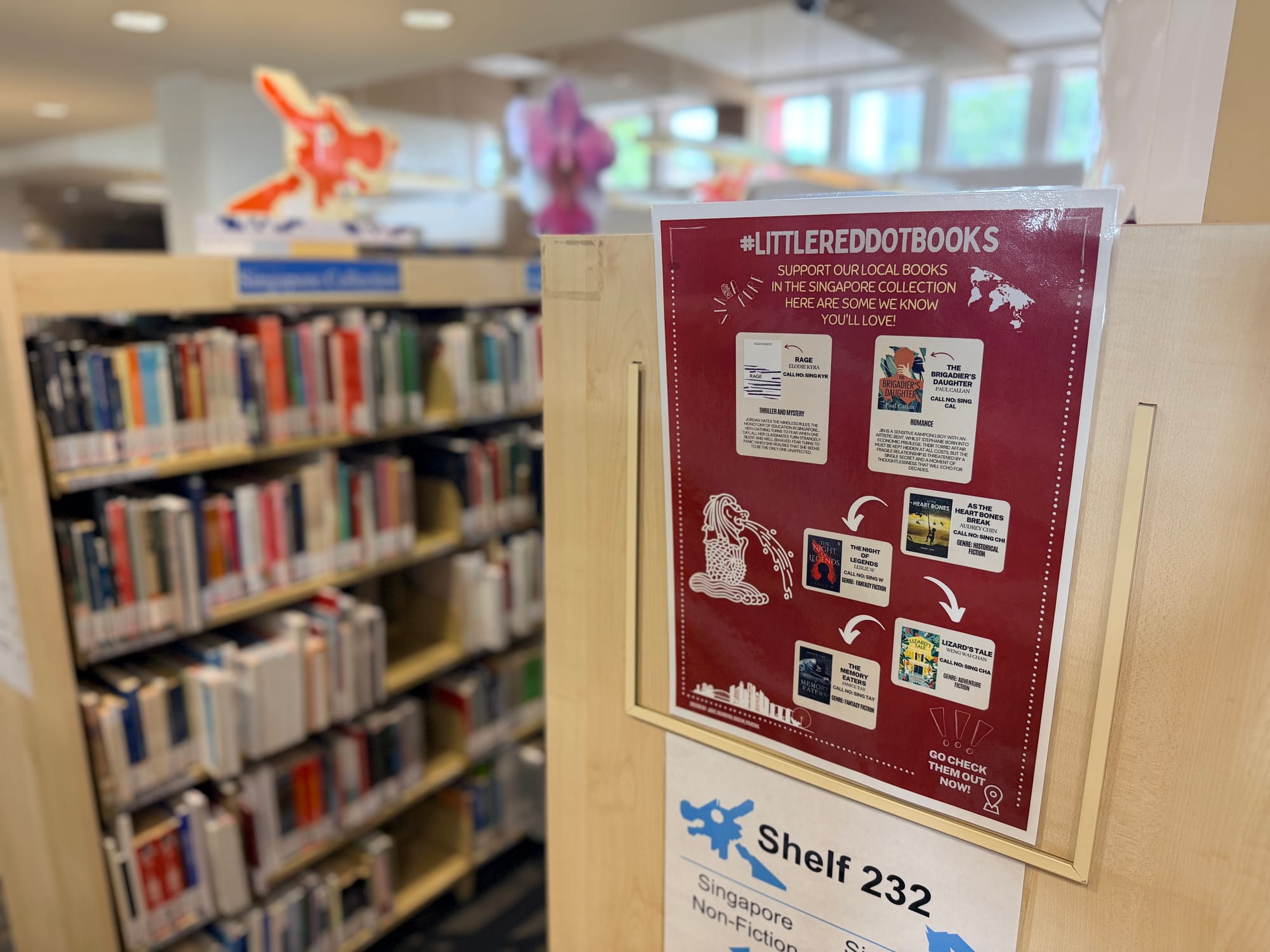
If anything, the branches felt even more alive than the main library. If the main library was something like a cathedral - an environment that inspires a sense of transcendence - the branches were like a neighborhood parish, familiar and worn in.
So while I came away from the main library impressed, it's actually the branches that I think are the more important achievement. What it takes to build a crown jewel main library can be accomplished through the philanthropic interest of a relatively small group of people of means. To build and maintain a library system and sustain it over time is the real demonstration of a commitment to the public good[5].
Why the humanistic public sector matters
Even while I was still in Singapore, I had already started turning over the question in my head: why does any or all of this even matter? What does the state of playgrounds or libraries have to do with anything? Are they really indicative of a commitment to some humanistic ideal? Why should we want a more humanistic bureaucracy anyway? And is there even anything about this that translates beyond a small city-state like Singapore?
The thread that I'd encourage anyone and everyone to pull at is this: the humanistic bureaucracy emerges from a concern for the common good. Bureaucracy in general is a tool of fairness and consistency, but the hatred it tends to engender comes from the fact that what it achieves in those areas comes through the provision of the lowest common denominator, the easiest think to make standard and accessible. In that process, it often loses sight of who it is meant to serve and elevates the means to the end. This is Jacques Ellul's critique of the technological society: it has jettisoned its values and identity in pursuit of accumulating more and creating it more efficiently.
Whether Singapore is doing so openly or not, it is acting in defiance of the technological society by building its bureaucratic structure around a strong sense of a shared national identity rooted in a set of values that are concerned with a point of view of what it means to thrive that relies on efficiency but isn't entirely centered on it.
I couldn't help thinking while I was in Singapore of what it would look like to be a working artist there compared to a place like New York City or San Francisco. How does your creative work change when you don't have to worry about providing for your basic survival needs? Or when you don't have to have a commercial sensibility in order to continue working? And I think those questions extend beyond just the creative industries: how does the scope of possibility change when every possibility isn't influenced by whether or not you'll be able to have enough to eat, have a safe place to call home, and don't have to worry that the bottom can drop out with the slightest miscalculation?
I don't actually know that Singapore can fully answer all of these questions; it's not a panacea. Much as I'm singing its praises here, there's also a dark history of autocracy and repression that it has to reckon with that goes hand in hand with this part of the story. And much as it might be creating the conditions for a creative society, there are very few people who even now would say that creativity is a defining Singaporean trait[6].
But the way that it is creating those conditions seems like it might be in defiance of the way that we typically conceive of bureaucracy. The key to making sense of all this comes from 2 books - 1 that I read years ago, and 1 that hadn't even been published yet when I was first puzzling over what to say about what I see happening in Singapore[7].
The first book - Seeing Like A State by James C. Scott - explores how large systems need to standardize knowledge in order to make it comprehensible for decision-making that can be generalized across the system. The critique Scott presents is that the process of standardization strips away the things that can't be generalized and standardized, and in doing so the system often loses the essence of what made it work in a small scale. This is the historical story of what bureaucracy is & what it does: it creates structures that, ideally, are predictable, fair, and universally accessible...with the drawback that they are also often slow, incapable of tolerating nuance, inflexible, and resistant to change.

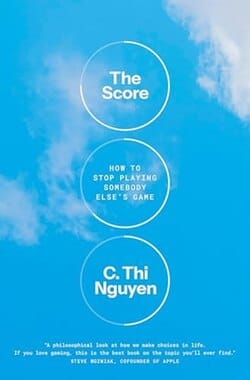
The second book - The Score by C. Thi Nguyen - interrogates the metrics by which these bureaucratic systems are calibrated and the way that they introduce a hidden value system focused on efficiency that insidiously overtakes and captures any competing value system. As Nguyen puts it,
"Our institutional lives are usually ruled by very small number of pervasive metrics. We have very little power over which ones dominate our lives, and what they measure. And these metrics have been engineered not to give us a meaningful life but for the convenience of vast bureaucratic information systems."
In the introduction to this essay I asserted that Singapore has immersed itself in a tension between the messy richness of culture and the benefits of clean standardization. At this point, I want to point out that this has happened because throughout their history they have expended energy both in building a highly functional bureaucracy and in defining a sense of national identity that isn't fully harmonious with the values that bureaucracy prizes...and as a result, the tension between the system and the identity actually seems healthy and productive. The identity gives definition to an idea of what is meaningful, the system builds processes of providing that sense of meaning to all. They hold each other in check.
There's a natural question that arises from this: is Singapore exceptional, or is something like this portable to other places & contexts?[8] The answer to both parts of the question is yes. Singapore is exceptional in that it's a city-state: in geographic and population size, comparable to a metropolitan area; in legal and diplomatic standing, comparable to a nation. But that also suggests the ways that the Singapore approach becomes portable: on a smaller scale, at the level of the city rather than the level of the nation. Cities that are part of a larger national entity have additional complications to navigate, of course, but the qualities that underpin a humanistic bureaucracy are often present already. So many cities have a distinct civic identity and particular shared values - think about the largest city you've ever lived in, and you can probably identify these traits. While city bureaucracies will face standardization and generalization pressures, the smaller size of cities both reduces the number of different variables and variants these pressures will focus on and increases the understanding of local context that needs to be held and preserved.
All of this is to say, I flew halfway around the world to Singapore when I probably could have just taken the train to Amsterdam. Oh well. No regrets.
- though I'm fine with that too!
- which is an excellent library too!
- When I was at the Central Library it was about exploring AI, at other branches I couldn't see what the topics were but I could see rooms full of participants.
- or, I suppose, a trunk and branches might be a fitting analogy.
- ok, yes, or it's Andrew Carnegie throwing his massive fortune behind the idea...though, really, he was more about building buildings than endowing the systems.
- PISA be damned!
- and, yes, which references the first book explicitly.
- I recognize the irony of trying to generalize and standardize.





Member discussion