
Nerd Notes: January

This is a special preview of Nerd Notes that I'm sending to all subscribers this month because some of you brought to my attention that Nerd Notes has kind of been a well kept secret. Basically, every month I send premium subscribers 1 more email with a collection of the things that I left on the cutting room floor, experiments I've been working on (and often early access to test them out), and the depth cuts that are - as the name suggests - pretty nerdy. You can get initiated into the cult of the Nerd for $5/month.
Hey there Nerds,
I’ve had this idea that’s been sitting in the back of my mind for a few months now since I was about halfway through Homo Ludens, and then someone sent me something that made me do the Leonardo DiCaprio “Pointing Rick Dalton” meme.

It was this podcast[1]:
 Pocket Casts
So here’s my big idea, and then I’ll work backwards to where it comes from and how it relates to all of this:
The Forbes Billionaire List[2] is a broken scoreboard. It uses the quantifiable value of wealth, and we as a society treat it as a proxy for something like valor.
Valorizing the wealthy isn’t a uniquely modern or recent phenomenon, but I do think the scoreboard is the most significant difference between the ways it played out in the past versus now. To illustrate this, let’s do a quick thought experiment:
Imagine living as an average person from a hundred years ago. Call it 1926. You’re in the middle of the inflation of one of the biggest speculative stock bubbles of all time, and it won’t come crashing down for a few years. You’re in the midst of global industrialization & mechanization at a massive scale. As a consequence of both of these phenomena, you better believe there are some fabulously wealthy people.
And how do you know who these wealthy people are? First, there’s the simple question of how you identify them. Wherever you happen to live, someone lives in the biggest, nicest house. Within the closest circle that you experience of the world, that person is wealthy[3].
Do you respect that person or even revere them? It depends, doesn’t it. What it depends on is that person’s conduct. They might be reclusive, so you never see them and know very little about them. They might be magnanimous. They might be a total prick. Sure, you might wish you had their very nice house regardless of who they are, but whether you want their life depends a great deal on their visible public conduct and the extent to which it aligns with what you see as good.
Now to some extent, in the world of today that’s probably still true because most people don’t live in proximity to a Forbes-level wealthy person.
But still in the thought experiment, there were also Forbes-level wealthy people back then in that post-robber baron world. For most normal people, however, awareness of those people rarely if ever penetrated into their conscious existence[4]. The only ways that they made themselves known were through their conduct. You might be aware of the Carnegies because your local library was named after them, or you might know about the Stanfords because they got their name on the university. If you thought those were commendable ways for them to use their wealth, you maybe thought a little more highly of the name. You engaged in an exercise in which you examined your own values and calibrated it against the public conduct of a person.
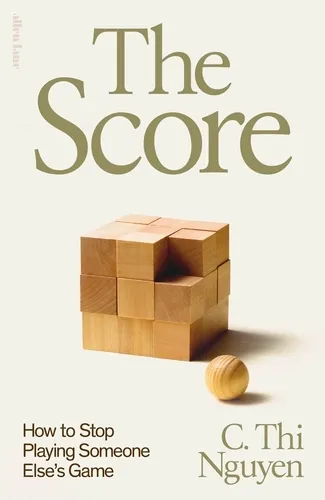
The Forbes List changes that because it - and other kind of ranking lists - are essentially just scoreboards. The Forbes List has taken a single metric, wealth, and made & publicized a scoreboard for it. Consequently, normal people become more aware of the existence of wealthy people because we can see an exhaustive list of the people who have obscene wealth, ranked by who has the most. But even as we become more aware of their existence, what we know about most of them is actually diminished by the list, because it largely reduces the people to the metric. C. Thi Nguyen - the guest on that podcast episode above - calls out the problem in his new book: Metrics feel stultifying because they provide a seductive clarity that is nevertheless a thin measure of the rich and complex world they purport to represent.
Accumulation of wealth says nothing about valor or goodness, but the pronouncement of it on a scoreboard is meant to give a sense that these are people who are somehow commendable because they have won at the accumulation game.
I haven’t read Nguyen’s new book yet[5], but a big part of his critique of what I’m going to call scoreboard culture seems to rest on the idea that scoreboards turn complex, nuanced judgments that are grounded in different sets of values, preferences, and even paradigms and turns them into crude measures of ostensible quality.
I’d bet that Nguyen has read some Jacques Ellul, because the essence of that critique connects back to one of Ellul’s big ideas from his book The Technological Society: that efficiency - what should be a means of optimizing another value - has become an end unto itself. To do something more efficiently, even to maximize efficiency, is considered objectively good.

IMHO, the best part of that podcast is when Nguyen distinguishes between the goal of a game and the purpose of a game - ie, the goal of playing Settlers of Catan is to score 10 victory points, but the purpose of playing Settlers of Catan is to have some fun in a light competition with other people. I would argue that the Forbes list is an artifact of people who are succeeding in the goal of the accumulation game, but who mostly seem to have lost sight of the purpose of the game[6].
You may want to ask, “So how do we build a better scoreboard?” But that’s a misguided exercise. The whole point is that the scoreboard is a cognitive shortcut, and there are plenty of trivial things for which that shortcut is just fine; look at the top 5 all time scorers in the NBA, and we can quibble about which of them is the best player of all time[7], but you’d have a hard time trying to make a case that the actual best player doesn’t even sniff the upper echelon of that list. It’s a very good proxy for what it purports to measure. The NBA also hands out a humanitarian award every year. There’s no quantitative measure for that one - it’s based on a subjective judgment that can’t be translated into a formula or algorithm and that would feel dissatisfying if we even tried.
I said at the top that this thought originated for me as I was reading Homo Ludens, because in the book Huizinga is looking at play as an artifact of culture - the way we play is demonstrative of what we value. The kinds of play and the approaches to play that a society embraces are revealing of that society’s values. But the idea he puts out there that is even more provocative and that has been stuck in my mind, shaping so many of my ideas ever since is that play doesn’t just reveal who you are but also who you are becoming, because play is seen as trivial and therefore acts as a space in which it’s safe to explore possibilities and potential. It acts as a testing ground for what could be.
Back in the day when I was starting a university, I would often have informal advisory sessions with students who were trying to make sense of and figure out what they wanted to do with their lives. In the years since, I have heard back from a lot of these students who have highlighted 2 pieces of advice that I gave them that had real resonance. The first was that I told them that if attending a class felt like a waste of time, then they just shouldn't go[8], but the second is the one that's germane to this discussion: I asked them to look at life as a game and consider what the game that they wanted to play was and what they needed to do in order to be good at that game.
And I'd extend that same question to a collective level. It isn’t that we need better scoreboards for the game of life. What we need instead is to understand the games that we think are worth playing, and for the most part we need different games that aren’t as easily reduced to scoreboards.
- Because that someone, fellow Nerd David Fu, has been acting as my own personal Pablo Torre Finds Out curator these days.
- And, yes, I'm intentionally not linking to it.
- And if you happen to be that person - which for the sake of this thought experiment you aren’t - then you very likely have friends or acquaintances from the towns around you, and one of them probably has a bigger, nicer house than you.
- even if the effects of the institutions that produced wealth might have been acutely felt, for better or for worse
- I’m planning to pick up a copy when I’m in New York this week.
- and, in many cases, who don’t realize that not everyone is trying to play the same game or even see the game as all that worthwhile
- And that among the top 5 there's 1 who very clearly isn't. I would say "iykyk" but you don't even need to be in the know to know which one of these doesn't belong. But I'm still gonna say it: it's Karl Malone.
- I actually wrote that one in an email that I sent to the entire student body in our first year, much to the consternation of the faculty.